 العربية
 English
 हिन्दी
 Malay
Malay اُردُو
 বাংলা
বাংলা Français
 Português
 Italiano
 Nederlands
 Deutsch
 Русский
 Español
 中文
中文 ไทย
ไทย Türkçe
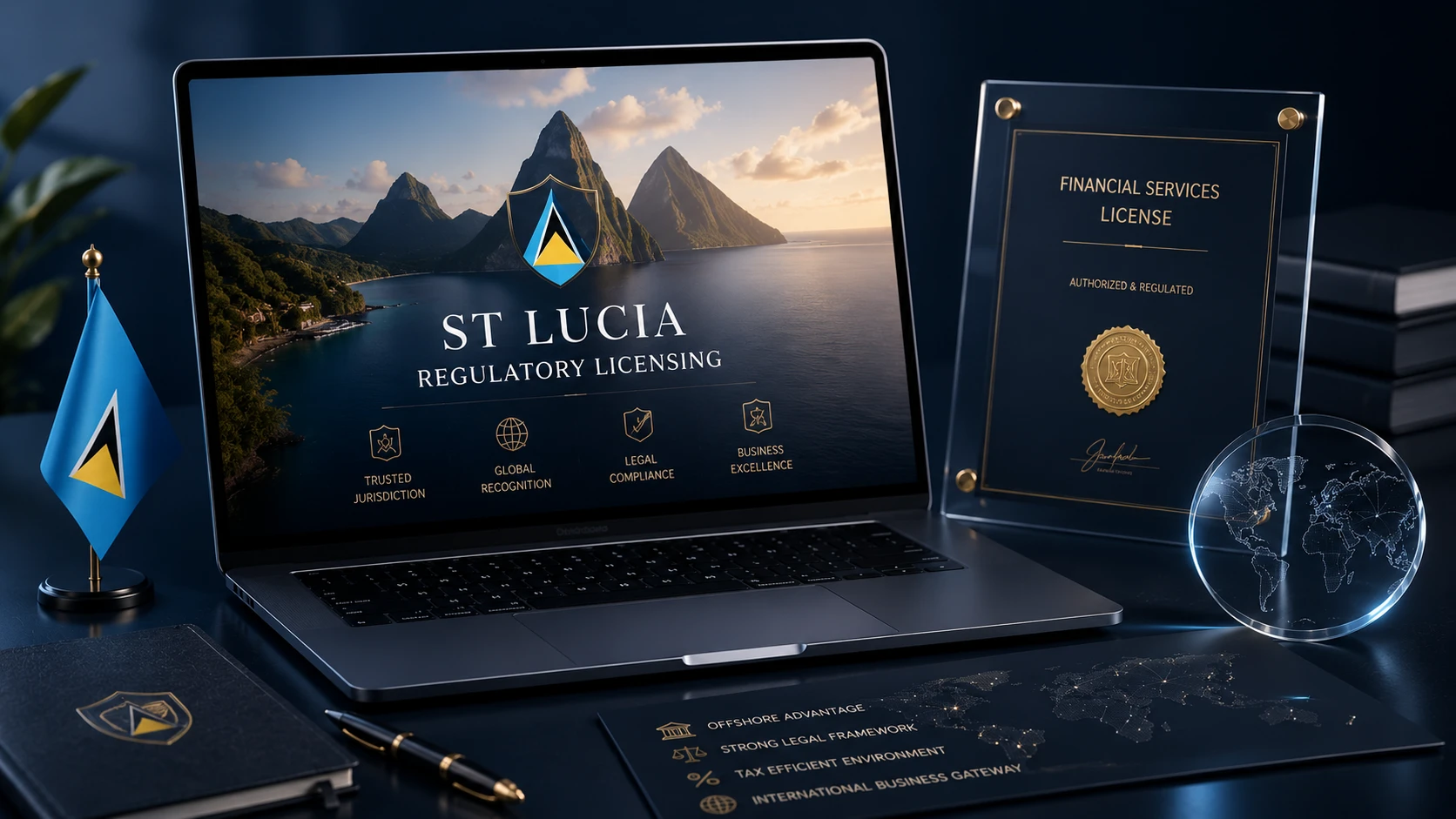
St Lucia Regulatory Licensing

Added By BridgingFX
Product overview
Everything you need to know about this product
St Lucia Regulatory Licensing
Entering a regulated financial market requires more than submitting an application. It requires careful preparation, accurate documentation, appropriate corporate structuring, well-defined compliance procedures, and a clear understanding of the jurisdiction's regulatory expectations. St Lucia Regulatory Licensing provides end-to-end support for businesses seeking to establish a regulated presence in Saint Lucia, helping organize the licensing process from initial planning through application preparation, regulatory communication, and ongoing compliance considerations.
Saint Lucia can be an attractive jurisdiction for businesses evaluating Caribbean market opportunities, but regulatory requirements still need to be approached carefully. Every application must be structured around the applicable legal and regulatory framework, with documentation and business processes aligned to the requirements relevant to the proposed activities.
Our approach is designed to reduce unnecessary delays, improve application readiness, and give business owners a clear understanding of what is required at each stage. From entity formation and corporate documentation to compliance policies, regulatory correspondence, and renewal planning, the process is managed through a structured framework rather than fragmented administrative tasks.
End-to-End Licensing Support
The licensing process involves multiple interconnected stages, and missing information in one area can create delays elsewhere.
Our service provides coordinated support across company formation, application preparation, documentation, compliance planning, regulatory communication, and post-licensing requirements, creating a more organized path from initial planning to regulatory submission.
Jurisdiction Assessment
Before beginning the application process, businesses need to understand whether the jurisdiction and proposed structure are appropriate for their intended activities.
We help assess the planned business model, ownership structure, services, target markets, operational requirements, and regulatory considerations so that the licensing strategy is aligned with the business objectives.
Business Activity Assessment
Different financial activities can involve different regulatory requirements.
The proposed business model is reviewed to determine which activities the company intends to conduct and what regulatory considerations may apply to those activities.
This helps establish a clearer licensing roadmap before significant resources are committed to the application.
Entity Formation Support
A properly structured legal entity is an important foundation for a regulatory application.
Our support can include coordination around entity formation, corporate documentation, ownership information, director details, and other structural requirements relevant to the licensing process.
Corporate Documentation
Regulators generally require detailed information about the applicant and its ownership and management structure.
We help organize corporate records and supporting documentation so that the application presents a consistent and complete picture of the proposed business.
Ownership and Management Documentation
Ownership, directors, shareholders, and key management personnel may form an important part of the regulatory review.
Documentation is organized to clearly present the company's ownership and management structure and support the required due-diligence process.
Licensing Application Preparation
A strong application requires more than completing a form.
Supporting documentation, business information, organizational details, policies, financial information, and operational plans need to work together consistently.
We coordinate the preparation process to help ensure that the application package is complete, logically structured, and aligned with applicable requirements.
Regulatory Documentation Review
Documentation can be reviewed for consistency, completeness, and alignment before submission.
This helps identify missing information, conflicting details, outdated documents, or other issues that could result in additional regulatory questions.
Compliance Policy Development
Regulated businesses require appropriate compliance frameworks covering areas such as customer due diligence, risk management, record keeping, internal controls, and reporting.
We support the drafting and organization of policies appropriate to the proposed business model and applicable regulatory expectations.
AML and KYC Frameworks
Anti-money laundering and customer due-diligence procedures are important components of many regulated financial businesses.
The licensing preparation process can include appropriate AML/KYC documentation, customer verification procedures, risk classification processes, transaction monitoring principles, escalation procedures, and record-keeping requirements.
Risk Management Framework
Regulatory applications may require businesses to demonstrate how operational, financial, customer, and other relevant risks will be identified and managed.
We help structure risk-management documentation around the actual business model rather than relying on generic policies that may not accurately reflect operational activities.
Internal Control Framework
Effective internal controls help establish accountability and operational discipline.
The licensing preparation process can include documentation covering approvals, responsibilities, segregation of duties, transaction controls, compliance oversight, reporting processes, and escalation procedures.
Business Plan Preparation
A clear business plan helps explain how the proposed company intends to operate.
Business plans can cover the company's objectives, products and services, target markets, operational structure, revenue model, technology environment, staffing requirements, compliance framework, and financial expectations.
Financial Planning Documentation
Regulatory applications may require information regarding the financial position and projected operations of the business.
We help organize relevant financial documentation and projections in a structured format appropriate to the application requirements.
Regulatory Communication
Communication with regulators can become complex when additional questions or clarification requests arise.
We maintain a structured communication process to help coordinate responses, clarify documentation requirements, and keep the application moving through the relevant stages.
Application Query Management
Regulators may request additional information during the review process.
Rather than responding to individual questions in isolation, we help organize responses and supporting documentation so that information remains consistent across the entire application.
Regulatory Follow-Up
Ongoing follow-up can help ensure that outstanding application matters are identified and addressed.
We monitor the progress of the application and coordinate relevant communications and documentation requests throughout the review process.
Document Alignment
One of the most important aspects of regulatory preparation is consistency.
Corporate documents, business plans, compliance policies, ownership information, financial projections, and operational descriptions should present a coherent picture of the business.
Our process focuses on aligning these materials before submission.
Client Fund Considerations
Businesses handling client funds need to understand the applicable requirements around fund management, safeguarding, segregation, and operational controls.
We explain relevant obligations and help businesses incorporate appropriate processes into their operational and compliance frameworks, subject to the applicable regulatory requirements.
Reporting Obligations
Regulatory licensing does not necessarily end when a license is granted.
Licensed businesses may have ongoing reporting, record-keeping, compliance, and regulatory obligations.
We help explain these responsibilities upfront so that business owners understand the operational requirements associated with maintaining their regulated status.
Ongoing Compliance Planning
A sustainable regulatory strategy requires ongoing compliance rather than a one-time licensing exercise.
We help businesses understand the recurring compliance responsibilities relevant to their structure and activities and establish a framework for maintaining appropriate documentation and procedures.
License Renewal Support
Licenses and regulatory registrations may have renewal or ongoing maintenance requirements.
Our service includes planning around renewal timelines, documentation updates, regulatory correspondence, and other relevant requirements to help businesses avoid unnecessary administrative disruption.
Regulatory Change Awareness
Regulatory environments can evolve over time.
Businesses need to remain aware of changes that may affect their licensing obligations, compliance policies, reporting requirements, or operational structure.
We help businesses understand when regulatory developments may require updates to their documentation or processes.
Transparent Cost Structure
Licensing costs can include multiple components, and businesses should understand these expenses before beginning the process.
We provide a structured breakdown of applicable government fees, professional service fees, company formation costs, compliance-related expenses, and other relevant charges where applicable.
Government and Service Fees
Separating government charges from professional service costs provides greater financial transparency.
Clients can understand which expenses relate directly to regulatory or government requirements and which relate to professional assistance and administrative services.
Clear Licensing Timeline
Regulatory applications can involve multiple stages, and timelines can depend on documentation quality, regulator review, application complexity, and other factors.
We provide a structured overview of the expected process and identify key stages so that businesses can plan resources and operational milestones more effectively.
Reduce Application Delays
Incomplete documentation and inconsistent information can create avoidable delays.
By reviewing the application package before submission and coordinating responses to regulatory questions, our approach is designed to reduce unnecessary back-and-forth wherever possible.
Regulatory Readiness Review
Before submission, businesses can benefit from reviewing whether they are prepared for the practical requirements associated with operating a regulated business.
This can include documentation, policies, corporate structure, operational processes, management information, financial planning, and technology considerations.
Technology and Operational Readiness
Modern financial businesses often depend on CRM systems, payment infrastructure, trading platforms, KYC systems, reporting tools, and other technology.
Where relevant, the licensing preparation process can take these operational systems into account so that the proposed business model and technology environment are appropriately aligned.
Management and Staffing Considerations
Regulated businesses may need appropriate management, compliance, operational, and other personnel depending on the applicable requirements.
We help businesses understand the role and documentation considerations associated with key personnel and organizational responsibilities.
Multi-Jurisdictional Business Planning
Businesses operating internationally often need to consider how a Saint Lucia structure interacts with their wider corporate and regulatory footprint.
We help organize the licensing strategy around the company's broader business structure while identifying areas that may require additional professional or jurisdiction-specific advice.
Compliance Record Management
Good record keeping is fundamental to ongoing compliance.
Businesses should maintain appropriate records relating to customer due diligence, transactions, policies, compliance reviews, regulatory communications, and other required activities.
Our approach emphasizes documentation and operational organization from the beginning.
Audit Trail Preparation
A defensible compliance environment requires the ability to demonstrate what decisions were made, when they were made, and how relevant requirements were addressed.
Structured records and audit trails can help businesses demonstrate operational accountability and support future regulatory reviews.
Post-Licensing Support
Obtaining a license is only one part of establishing a sustainable regulated operation.
Post-licensing support can help businesses understand ongoing obligations, maintain documentation, update policies, prepare for renewals, and manage regulatory communications as the business develops.
Business Growth Considerations
A licensing structure should support the company's intended business model rather than create unnecessary restrictions or operational complexity.
We consider the company's planned services, target markets, technology requirements, customer model, and growth objectives when organizing the licensing strategy.
Caribbean Market Positioning
Establishing a regulated presence in the Caribbean can form part of an international business strategy.
Businesses can evaluate Saint Lucia alongside their broader geographic, operational, and regulatory objectives to determine whether the jurisdiction fits their long-term plans.
Professional Regulatory Coordination
Managing multiple advisors, documents, applications, and regulatory communications can become time-consuming.
A coordinated licensing process provides a central point for organizing the application and keeping different components aligned throughout the process.
Reduce Administrative Complexity
Without structured support, business owners may spend significant time coordinating forms, documents, policies, corporate records, and regulatory correspondence.
Our process centralizes these activities to create a clearer workflow and reduce unnecessary administrative complexity.
Application From Start to Submission
From initial assessment through document preparation and regulatory submission, each stage is handled through a defined process.
This allows business owners to focus on their wider business strategy while the licensing requirements are organized systematically.
Built Around Your Business Model
No two financial businesses operate in exactly the same way.
The licensing preparation process should reflect the company's proposed services, customer base, ownership structure, technology environment, risk profile, and operational model.
A Structured Route to Regulatory Licensing
Saint Lucia regulatory licensing can be an important step for businesses seeking to establish a formal presence within the Caribbean financial-services environment.
The process requires careful preparation, accurate documentation, appropriate compliance frameworks, and clear communication with the relevant authorities.
Our end-to-end approach helps businesses organize these requirements into a structured licensing journey, from entity formation and application preparation through regulatory communication, compliance planning, and ongoing licensing considerations.
Build Your Regulated Business With Confidence
The objective is not simply to submit an application. It is to help establish a regulatory and operational foundation that the business can maintain as it grows.
Prepare correctly. Structure your business carefully. Build the required compliance framework, manage the application process professionally, and establish a stronger foundation for operating within the applicable Saint Lucia regulatory framework.
Move forward with clarity, transparency, and structured regulatory support—without cutting corners on the documentation, compliance, and operational preparation that serious regulated businesses require.
Product description
Learn more about product features and benefits
St Lucia Regulatory Licensing
Entering a regulated financial market requires more than submitting an application. It requires careful preparation, accurate documentation, appropriate corporate structuring, well-defined compliance procedures, and a clear understanding of the jurisdiction's regulatory expectations. St Lucia Regulatory Licensing provides end-to-end support for businesses seeking to establish a regulated presence in Saint Lucia, helping organize the licensing process from initial planning through application preparation, regulatory communication, and ongoing compliance considerations.
Saint Lucia can be an attractive jurisdiction for businesses evaluating Caribbean market opportunities, but regulatory requirements still need to be approached carefully. Every application must be structured around the applicable legal and regulatory framework, with documentation and business processes aligned to the requirements relevant to the proposed activities.
Our approach is designed to reduce unnecessary delays, improve application readiness, and give business owners a clear understanding of what is required at each stage. From entity formation and corporate documentation to compliance policies, regulatory correspondence, and renewal planning, the process is managed through a structured framework rather than fragmented administrative tasks.
End-to-End Licensing Support
The licensing process involves multiple interconnected stages, and missing information in one area can create delays elsewhere.
Our service provides coordinated support across company formation, application preparation, documentation, compliance planning, regulatory communication, and post-licensing requirements, creating a more organized path from initial planning to regulatory submission.
Jurisdiction Assessment
Before beginning the application process, businesses need to understand whether the jurisdiction and proposed structure are appropriate for their intended activities.
We help assess the planned business model, ownership structure, services, target markets, operational requirements, and regulatory considerations so that the licensing strategy is aligned with the business objectives.
Business Activity Assessment
Different financial activities can involve different regulatory requirements.
The proposed business model is reviewed to determine which activities the company intends to conduct and what regulatory considerations may apply to those activities.
This helps establish a clearer licensing roadmap before significant resources are committed to the application.
Entity Formation Support
A properly structured legal entity is an important foundation for a regulatory application.
Our support can include coordination around entity formation, corporate documentation, ownership information, director details, and other structural requirements relevant to the licensing process.
Corporate Documentation
Regulators generally require detailed information about the applicant and its ownership and management structure.
We help organize corporate records and supporting documentation so that the application presents a consistent and complete picture of the proposed business.
Ownership and Management Documentation
Ownership, directors, shareholders, and key management personnel may form an important part of the regulatory review.
Documentation is organized to clearly present the company's ownership and management structure and support the required due-diligence process.
Licensing Application Preparation
A strong application requires more than completing a form.
Supporting documentation, business information, organizational details, policies, financial information, and operational plans need to work together consistently.
We coordinate the preparation process to help ensure that the application package is complete, logically structured, and aligned with applicable requirements.
Regulatory Documentation Review
Documentation can be reviewed for consistency, completeness, and alignment before submission.
This helps identify missing information, conflicting details, outdated documents, or other issues that could result in additional regulatory questions.
Compliance Policy Development
Regulated businesses require appropriate compliance frameworks covering areas such as customer due diligence, risk management, record keeping, internal controls, and reporting.
We support the drafting and organization of policies appropriate to the proposed business model and applicable regulatory expectations.
AML and KYC Frameworks
Anti-money laundering and customer due-diligence procedures are important components of many regulated financial businesses.
The licensing preparation process can include appropriate AML/KYC documentation, customer verification procedures, risk classification processes, transaction monitoring principles, escalation procedures, and record-keeping requirements.
Risk Management Framework
Regulatory applications may require businesses to demonstrate how operational, financial, customer, and other relevant risks will be identified and managed.
We help structure risk-management documentation around the actual business model rather than relying on generic policies that may not accurately reflect operational activities.
Internal Control Framework
Effective internal controls help establish accountability and operational discipline.
The licensing preparation process can include documentation covering approvals, responsibilities, segregation of duties, transaction controls, compliance oversight, reporting processes, and escalation procedures.
Business Plan Preparation
A clear business plan helps explain how the proposed company intends to operate.
Business plans can cover the company's objectives, products and services, target markets, operational structure, revenue model, technology environment, staffing requirements, compliance framework, and financial expectations.
Financial Planning Documentation
Regulatory applications may require information regarding the financial position and projected operations of the business.
We help organize relevant financial documentation and projections in a structured format appropriate to the application requirements.
Regulatory Communication
Communication with regulators can become complex when additional questions or clarification requests arise.
We maintain a structured communication process to help coordinate responses, clarify documentation requirements, and keep the application moving through the relevant stages.
Application Query Management
Regulators may request additional information during the review process.
Rather than responding to individual questions in isolation, we help organize responses and supporting documentation so that information remains consistent across the entire application.
Regulatory Follow-Up
Ongoing follow-up can help ensure that outstanding application matters are identified and addressed.
We monitor the progress of the application and coordinate relevant communications and documentation requests throughout the review process.
Document Alignment
One of the most important aspects of regulatory preparation is consistency.
Corporate documents, business plans, compliance policies, ownership information, financial projections, and operational descriptions should present a coherent picture of the business.
Our process focuses on aligning these materials before submission.
Client Fund Considerations
Businesses handling client funds need to understand the applicable requirements around fund management, safeguarding, segregation, and operational controls.
We explain relevant obligations and help businesses incorporate appropriate processes into their operational and compliance frameworks, subject to the applicable regulatory requirements.
Reporting Obligations
Regulatory licensing does not necessarily end when a license is granted.
Licensed businesses may have ongoing reporting, record-keeping, compliance, and regulatory obligations.
We help explain these responsibilities upfront so that business owners understand the operational requirements associated with maintaining their regulated status.
Ongoing Compliance Planning
A sustainable regulatory strategy requires ongoing compliance rather than a one-time licensing exercise.
We help businesses understand the recurring compliance responsibilities relevant to their structure and activities and establish a framework for maintaining appropriate documentation and procedures.
License Renewal Support
Licenses and regulatory registrations may have renewal or ongoing maintenance requirements.
Our service includes planning around renewal timelines, documentation updates, regulatory correspondence, and other relevant requirements to help businesses avoid unnecessary administrative disruption.
Regulatory Change Awareness
Regulatory environments can evolve over time.
Businesses need to remain aware of changes that may affect their licensing obligations, compliance policies, reporting requirements, or operational structure.
We help businesses understand when regulatory developments may require updates to their documentation or processes.
Transparent Cost Structure
Licensing costs can include multiple components, and businesses should understand these expenses before beginning the process.
We provide a structured breakdown of applicable government fees, professional service fees, company formation costs, compliance-related expenses, and other relevant charges where applicable.
Government and Service Fees
Separating government charges from professional service costs provides greater financial transparency.
Clients can understand which expenses relate directly to regulatory or government requirements and which relate to professional assistance and administrative services.
Clear Licensing Timeline
Regulatory applications can involve multiple stages, and timelines can depend on documentation quality, regulator review, application complexity, and other factors.
We provide a structured overview of the expected process and identify key stages so that businesses can plan resources and operational milestones more effectively.
Reduce Application Delays
Incomplete documentation and inconsistent information can create avoidable delays.
By reviewing the application package before submission and coordinating responses to regulatory questions, our approach is designed to reduce unnecessary back-and-forth wherever possible.
Regulatory Readiness Review
Before submission, businesses can benefit from reviewing whether they are prepared for the practical requirements associated with operating a regulated business.
This can include documentation, policies, corporate structure, operational processes, management information, financial planning, and technology considerations.
Technology and Operational Readiness
Modern financial businesses often depend on CRM systems, payment infrastructure, trading platforms, KYC systems, reporting tools, and other technology.
Where relevant, the licensing preparation process can take these operational systems into account so that the proposed business model and technology environment are appropriately aligned.
Management and Staffing Considerations
Regulated businesses may need appropriate management, compliance, operational, and other personnel depending on the applicable requirements.
We help businesses understand the role and documentation considerations associated with key personnel and organizational responsibilities.
Multi-Jurisdictional Business Planning
Businesses operating internationally often need to consider how a Saint Lucia structure interacts with their wider corporate and regulatory footprint.
We help organize the licensing strategy around the company's broader business structure while identifying areas that may require additional professional or jurisdiction-specific advice.
Compliance Record Management
Good record keeping is fundamental to ongoing compliance.
Businesses should maintain appropriate records relating to customer due diligence, transactions, policies, compliance reviews, regulatory communications, and other required activities.
Our approach emphasizes documentation and operational organization from the beginning.
Audit Trail Preparation
A defensible compliance environment requires the ability to demonstrate what decisions were made, when they were made, and how relevant requirements were addressed.
Structured records and audit trails can help businesses demonstrate operational accountability and support future regulatory reviews.
Post-Licensing Support
Obtaining a license is only one part of establishing a sustainable regulated operation.
Post-licensing support can help businesses understand ongoing obligations, maintain documentation, update policies, prepare for renewals, and manage regulatory communications as the business develops.
Business Growth Considerations
A licensing structure should support the company's intended business model rather than create unnecessary restrictions or operational complexity.
We consider the company's planned services, target markets, technology requirements, customer model, and growth objectives when organizing the licensing strategy.
Caribbean Market Positioning
Establishing a regulated presence in the Caribbean can form part of an international business strategy.
Businesses can evaluate Saint Lucia alongside their broader geographic, operational, and regulatory objectives to determine whether the jurisdiction fits their long-term plans.
Professional Regulatory Coordination
Managing multiple advisors, documents, applications, and regulatory communications can become time-consuming.
A coordinated licensing process provides a central point for organizing the application and keeping different components aligned throughout the process.
Reduce Administrative Complexity
Without structured support, business owners may spend significant time coordinating forms, documents, policies, corporate records, and regulatory correspondence.
Our process centralizes these activities to create a clearer workflow and reduce unnecessary administrative complexity.
Application From Start to Submission
From initial assessment through document preparation and regulatory submission, each stage is handled through a defined process.
This allows business owners to focus on their wider business strategy while the licensing requirements are organized systematically.
Built Around Your Business Model
No two financial businesses operate in exactly the same way.
The licensing preparation process should reflect the company's proposed services, customer base, ownership structure, technology environment, risk profile, and operational model.
A Structured Route to Regulatory Licensing
Saint Lucia regulatory licensing can be an important step for businesses seeking to establish a formal presence within the Caribbean financial-services environment.
The process requires careful preparation, accurate documentation, appropriate compliance frameworks, and clear communication with the relevant authorities.
Our end-to-end approach helps businesses organize these requirements into a structured licensing journey, from entity formation and application preparation through regulatory communication, compliance planning, and ongoing licensing considerations.
Build Your Regulated Business With Confidence
The objective is not simply to submit an application. It is to help establish a regulatory and operational foundation that the business can maintain as it grows.
Prepare correctly. Structure your business carefully. Build the required compliance framework, manage the application process professionally, and establish a stronger foundation for operating within the applicable Saint Lucia regulatory framework.
Move forward with clarity, transparency, and structured regulatory support—without cutting corners on the documentation, compliance, and operational preparation that serious regulated businesses require.
Product specification
Quick product information

No review given yet!