العربية
 English
 हिन्दी
 Malay
Malay اُردُو
 বাংলা
বাংলা Français
 Português
 Italiano
 Nederlands
 Deutsch
 Русский
 Español
 中文
中文 ไทย
ไทย Türkçe
All In One CRM
Broker page tagline
Broker overview
All In One CRM
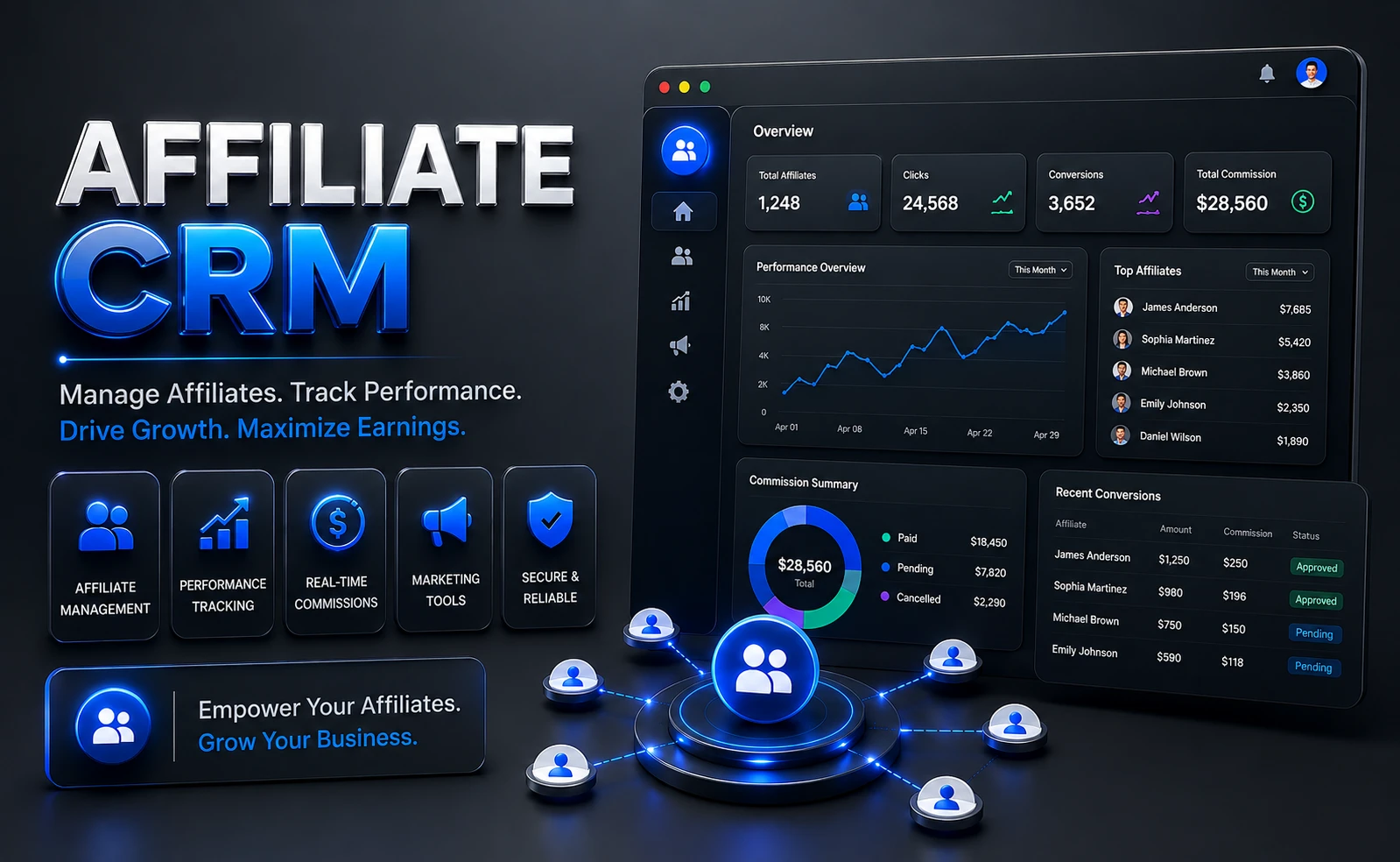
Running a modern brokerage, prop firm, fintech company, or financial services business should not mean managing dozens of disconnected systems, spreadsheets, communication channels, and back-office tools. All In One CRM brings the critical parts of your business together into one connected environment, giving your teams a single source of truth for clients, leads, sales, communication, onboarding, compliance, finance, support, and business operations.
Designed for businesses that need more than a traditional contact-management system, All In One CRM creates a centralized operating layer where customer information, trading activity, sales processes, communications, financial workflows, and internal operations can work together.
Instead of constantly moving information between separate platforms, your teams can work from connected data and automated workflows. Sales can manage leads and pipelines, compliance can monitor onboarding and verification, support can manage customer conversations, finance can track invoices and payments, and management can monitor business performance through centralized dashboards.
The result is a more connected business environment built to reduce operational friction and support growth.
One Platform for Your Entire Business
All In One CRM is designed to bring together the systems your teams depend on every day.
Lead management, customer relationship management, sales pipelines, marketing automation, communication, support, onboarding, documents, financial workflows, reporting, tasks, approvals, and compliance activities can all operate within one connected ecosystem.
This eliminates the need to constantly switch between unrelated applications and helps teams work from the same underlying customer and business information.
A Single Source of Truth
When customer information is spread across multiple systems, important details can easily become outdated, duplicated, or difficult to find.
All In One CRM creates a centralized customer record where relevant interactions and activities can be connected.
Sales conversations, customer communications, onboarding progress, support requests, documents, payments, account information, tasks, and other business events can be organized around the same customer profile.
Your teams spend less time searching for information and more time acting on it.
Complete Customer Relationship Management
All In One CRM provides a complete view of the customer lifecycle, from the first interaction through onboarding, active engagement, support, retention, and long-term relationship management.
Every stage can be connected through configurable workflows so your teams can understand not only who the customer is, but also where they are in the customer journey and what needs to happen next.
Lead Capture and Management
Capture leads from multiple channels and bring them directly into your CRM.
Leads can be organized, assigned, segmented, qualified, and moved through configurable sales pipelines.
The platform can help ensure that new opportunities do not remain buried in spreadsheets, email inboxes, messaging applications, or disconnected marketing platforms.
AI-Powered Lead Scoring
Not every lead has the same commercial value.
AI-powered lead scoring can help your sales team prioritize prospects based on configurable customer data, engagement signals, activity, and other relevant indicators.
Instead of treating every lead equally, sales representatives can focus more attention on opportunities that appear more likely to convert.
Intelligent Customer Segmentation
Customer segmentation can be automated using attributes such as location, account type, engagement, lifecycle stage, product interest, activity, revenue, or other business criteria.
This allows your teams to create more targeted sales, marketing, communication, and retention workflows without manually maintaining large customer lists.
Smart Sales Pipelines
Every business has a different sales process.
All In One CRM provides configurable sales pipelines that can be adapted to the way your organization actually sells.
Use drag-and-drop stages to manage opportunities, assign ownership, create follow-up tasks, define qualification steps, and monitor progress from initial contact to conversion.
Multiple Sales Pipelines
Different products and customer segments often require different sales journeys.
You can create separate pipelines for different products, regions, departments, customer types, or business models.
This allows a brokerage, prop firm, fintech company, or financial services business to manage multiple commercial processes from the same CRM environment.
Automated Lead Distribution
New leads can be automatically assigned according to configurable rules.
Distribution can be structured around sales representatives, departments, regions, products, lead sources, workload, or other business criteria.
This reduces manual assignment and helps ensure that new opportunities reach the appropriate team quickly.
Sales Activity Management
Sales teams can manage calls, emails, meetings, tasks, notes, follow-ups, and customer interactions from one place.
Managers can monitor team activity while representatives maintain a clear view of their outstanding work and upcoming priorities.
Automated Follow-Ups
Follow-up workflows can be triggered by customer actions, pipeline stages, inactivity, lead status, registration events, or other configured conditions.
Automated reminders and communications help reduce missed opportunities and create a more consistent sales process.
WhatsApp Integration
Customer conversations do not need to remain isolated inside separate messaging applications.
With WhatsApp integration, teams can manage relevant customer conversations within the broader CRM environment and associate communication with customer profiles.
This creates greater visibility into previous conversations and helps sales and support teams respond with more context.
Telegram Integration
Telegram communication can also be connected to the customer-management environment.
Relevant conversations, notifications, community interactions, and customer workflows can be integrated according to the business's requirements.
This is particularly useful for trading, crypto, fintech, and digital communities where Telegram is an important communication channel.
Email Communication
Connect email communication with customer records, sales workflows, support processes, and marketing campaigns.
Teams can maintain a centralized history of relevant correspondence instead of searching through multiple individual inboxes to understand what has already been discussed.
Unified Communication History
A customer's relationship with your business may span email, WhatsApp, Telegram, phone calls, support tickets, meetings, and other channels.
All In One CRM can bring these interactions together into a unified customer timeline, giving teams a clearer understanding of the relationship.
Customer Onboarding
Automate the process of bringing new customers into your business.
Onboarding workflows can include registration, information collection, document submission, verification, approvals, account creation, notifications, and internal tasks.
This reduces repetitive administrative work and creates a more consistent customer experience.
KYC and Compliance Workflows
For businesses operating in regulated or compliance-sensitive environments, customer onboarding can be connected with KYC and compliance processes.
Document collection, verification status, review queues, approval workflows, expiry tracking, and compliance-related tasks can be integrated into the customer lifecycle.
This helps teams maintain greater visibility over onboarding and compliance activities.
Document Management
Store and organize customer and business documents within centralized profiles and workflows.
Documents can be associated with customers, accounts, onboarding processes, contracts, compliance activities, or other relevant records.
Access can be controlled through role-based permissions.
Automated Document Workflows
Document-related processes can be automated to reduce manual administration.
The system can trigger document requests, reminders, reviews, approvals, and status changes according to configured business rules.
This is particularly valuable for organizations handling large volumes of customer documentation.
Support and Service Management
Customer support can operate directly from the same environment as sales and customer management.
Support teams can manage tickets, conversations, requests, escalations, priorities, assignments, and resolutions while maintaining access to the customer's broader history.
This creates a more connected support experience.
Ticketing and Case Management
Customer requests can be converted into structured cases with defined categories, priorities, owners, statuses, and workflows.
Managers can monitor unresolved issues while support representatives can focus on assigned cases.
Internal Ticketing
The platform can also support internal service requests between departments.
Employees can submit requests to IT, finance, compliance, operations, HR, or other internal teams without relying entirely on informal communication channels.
Marketing Automation
Marketing teams can use customer and lead data directly from the CRM to build targeted campaigns.
Automated journeys can be triggered by registration, customer activity, product interest, lifecycle stage, inactivity, or other configured conditions.
This creates a stronger connection between marketing campaigns and actual customer behavior.
Email Marketing
Create and manage targeted email campaigns using CRM segments and customer data.
Campaigns can support lead nurturing, onboarding, promotions, educational communication, re-engagement, and other customer journeys.
Lead Nurturing
Not every prospect is ready to convert immediately.
Automated lead-nurturing workflows can maintain engagement through scheduled communications and follow-ups until the prospect reaches the appropriate stage for sales engagement.
Campaign Management
Marketing campaigns can be organized and monitored from the same business environment as sales and customer data.
Track campaign activity, lead sources, engagement, conversions, and other relevant performance indicators to understand which campaigns are producing meaningful business outcomes.
Financial Management
All In One CRM can connect customer management with financial workflows.
Invoices, payments, wallets, subscriptions, transactions, commissions, and other financial information can be integrated into the broader customer lifecycle where required.
This provides finance teams with greater visibility without separating financial information from customer records.
Invoicing
Create, manage, and track invoices directly within the platform.
Invoice information can be connected with customer profiles and relevant business activity, helping finance teams maintain a more organized record of outstanding and completed transactions.
Payment Management
Payment workflows can be connected with customer accounts, invoices, subscriptions, deposits, withdrawals, or other financial processes.
Payment status can be monitored and surfaced through centralized dashboards.
Client Wallet Management
For businesses that require wallet functionality, customer balances and wallet-related activity can be integrated into the broader CRM ecosystem.
This is particularly relevant for trading, fintech, investment, and digital-asset businesses.
Financial Reporting
Management and finance teams can access centralized reports covering revenue, invoices, payments, transactions, customer activity, commissions, and other configured financial metrics.
Reports can be segmented by customer, product, department, sales representative, region, or other business dimensions.
Trading Business Integration
For brokerages and trading businesses, CRM functionality can be connected with trading infrastructure.
Client profiles can be associated with trading accounts, trading activity, platform information, balances, and other relevant data depending on the integrations enabled.
This creates a stronger connection between customer management and trading operations.
Multi-Platform Trading Environment
A modern brokerage may operate across multiple trading platforms.
The broader BridgeX ecosystem supports platform-management applications for environments such as MT4, MT5, cTrader, Vertex, Match-Trader, DXtrade, and TradeLocker.
Connecting these systems to the CRM creates a more centralized operating environment for managing customers and trading operations.
IB and Affiliate Management
Partner relationships can also be managed within the same ecosystem.
IBs, affiliates, partners, referrals, commissions, performance, and payout-related workflows can be connected to customer and sales information.
This helps businesses manage partner-driven acquisition without relying on disconnected spreadsheets and tracking systems.
Multi-Level Partner Structures
For organizations operating multi-level IB or affiliate structures, partner relationships can be organized into configurable hierarchies.
Commission calculations, referrals, partner performance, and related activity can then be connected to the appropriate partner structure.
Risk and Compliance Visibility
Risk and compliance teams require different information from sales or marketing teams.
All In One CRM can provide role-specific dashboards and workflows so authorized users can monitor relevant risk, compliance, verification, and operational activities.
The wider BridgeX ecosystem includes dedicated risk-management functionality for exposure and risk control.
Customizable Dashboards
Every department needs a different view of the business.
Sales teams can monitor leads and pipelines. Marketing teams can monitor campaigns. Finance teams can review payments and invoices. Compliance teams can monitor verification workflows. Management can access broader KPIs and revenue information.
Custom dashboards allow each department to focus on the information that matters most.
Real-Time KPI Monitoring
Business performance can be monitored through centralized dashboards and reports.
Track configurable KPIs such as lead conversion, sales pipeline value, customer acquisition, revenue, support activity, onboarding progress, campaign performance, partner activity, and operational performance.
AI Business Intelligence
AI can be used to transform CRM data into more actionable business insights.
The broader BridgeX platform includes AI capabilities such as lead scoring, churn prediction, revenue forecasting, upsell recommendations, customer lifetime value analysis, and customer insights.
These capabilities can help management move beyond simply viewing historical data toward identifying opportunities and potential risks.
AI Churn Prediction
Customer inactivity can be an important signal.
AI-powered churn analysis can help identify customers who may be at higher risk of disengagement based on configured behavioral and activity signals.
Sales and customer-success teams can then prioritize appropriate retention activities.
AI Upsell Opportunities
AI-assisted recommendations can help identify customers who may be suitable for additional products, services, or upgrades based on available customer information and business rules.
This creates opportunities to increase customer value without relying entirely on manual analysis.
Customer Lifetime Value
Understanding customer lifetime value helps businesses evaluate acquisition and retention strategies.
CRM data can be analyzed to provide greater visibility into customer revenue patterns, engagement, and long-term commercial value.
Automated Workflows
Automation is at the heart of a modern CRM.
Business events can trigger actions such as notifications, assignments, approvals, emails, tasks, account changes, document requests, and other configured processes.
This allows businesses to replace repetitive manual work with consistent automated workflows.
Approval Center
Organizations often require approvals across sales, finance, compliance, HR, and operations.
A centralized approval environment can bring pending requests together so authorized managers can review and process them efficiently.
Task and Project Management
CRM operations frequently involve work that extends beyond customer records.
Tasks and projects can be connected to teams, customers, departments, campaigns, operational activities, and business initiatives.
This helps keep execution connected to the underlying business context.
Employee and HR Operations
A complete business platform should also support the teams operating the business.
The BridgeX ecosystem includes HR functionality covering employees, departments, attendance, recruitment, time off, appraisals, payroll, and employee documents.
Connecting internal operations with the broader business environment helps reduce the number of separate systems required to manage the organization.
Role-Based Access Control
Different employees need different levels of access.
Role-based permissions allow organizations to define what each department, team, or individual can view and manage.
This supports better internal control and helps protect sensitive customer, financial, compliance, and operational information.
Audit Logs
Important system actions can be recorded through detailed audit logs.
Administrators can review changes, user activity, workflow events, approvals, and other relevant actions.
This creates greater accountability and provides a historical record for operational and compliance purposes.
Security-Focused Architecture
Security is not something that should be added after the platform is built.
BridgeX Apps highlights role-based access, audit trails, KYC and per-tenant isolation as part of its platform architecture.
For businesses managing sensitive financial and customer information, these controls provide an important foundation for secure operations.
Multi-Tenant Business Operations
Organizations managing multiple brands, jurisdictions, regions, or brokerage operations can benefit from a platform architecture designed to separate and organize operational data.
This can support businesses that need centralized management while maintaining appropriate data and access boundaries between different operations.
Multi-Country Operations
Financial businesses often operate across multiple markets.
The wider BridgeX platform includes support for multi-jurisdiction operations, regional desks, country-based workflows, and multi-country management.
This makes the CRM environment suitable for businesses planning to expand beyond a single market.
Communication and Collaboration
A unified business environment can include email, WhatsApp, SMS, VoIP, live chat, meetings, notifications, internal messaging, and other communication capabilities.
Bringing these channels closer to customer and business data helps teams maintain context and reduce communication fragmentation.
API and Third-Party Integrations
Your CRM should not become another isolated system.
API connectivity and integrations allow the CRM to communicate with external payment providers, trading platforms, communication systems, marketing tools, analytics services, and other business applications.
This creates a flexible technology environment that can evolve as your organization grows.
Data Management and Reporting
Centralized data becomes significantly more valuable when teams can analyze it effectively.
Data management, reporting, dashboards, exports, and analytics can provide management with a clearer understanding of business performance.
Instead of relying on manually assembled reports, teams can work from connected operational data.
CRM Migration
Businesses already using another CRM should not have to start from zero.
Migration workflows can help transfer existing customer information, accounts, balances, KYC records, partner structures, and other supported data into the new environment.
This can make the transition to a unified platform more practical.
Built for Brokerage Operations
All In One CRM is particularly suited to businesses where customer relationships connect directly with trading, payments, compliance, partners, and financial operations.
Rather than treating the CRM as a standalone sales tool, the platform can become part of the broader operating infrastructure of the business.
Built for Prop Firms
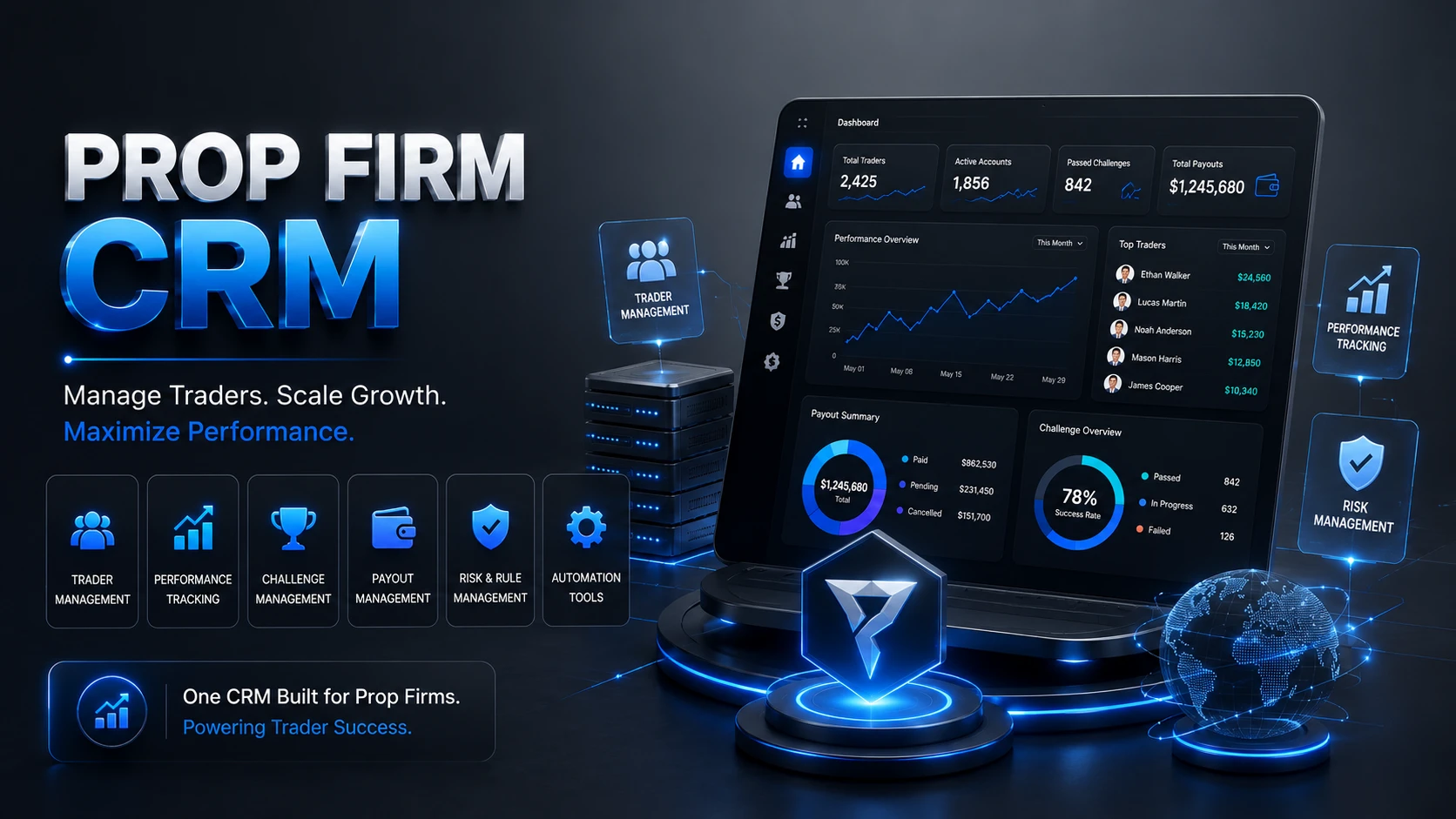
Prop firms can connect customer onboarding, challenge management, trading activity, support, payments, partner programs, and communication through a centralized ecosystem.
The BridgeX marketplace includes PropX CRM specifically for prop-firm challenge management.
Built for Trading Competitions
Trading competitions and leagues can also be connected to the broader CRM ecosystem.
LeagueX CRM provides league and competition trading management, with real-time data, role-based access, and configurable workflows.
This allows competition activity to become part of the wider customer and business relationship.
Built for Copy Trading and Managed Accounts
Businesses offering copy trading or managed-account services can connect these products with their broader customer environment.
BridgeX's marketplace includes Copy Trading and PAMM modules designed for trade replication and proportional investment management.
This allows businesses to build a more connected customer journey around trading products.
Built to Grow With Your Business
You should not need to replace your entire technology stack every time your business expands.
The BridgeX model allows businesses to activate applications as their requirements grow, while maintaining shared data across the ecosystem.
Start with the core CRM environment and expand into trading, compliance, marketing, finance, HR, risk, communication, and other operational capabilities as needed.
Modular and Flexible
Not every business needs every application on day one.
A modular approach allows organizations to activate the tools relevant to their current requirements and expand their technology environment as new needs emerge.
This creates a more flexible alternative to purchasing and managing a large collection of unrelated enterprise applications.
Reduce Operational Complexity
Disconnected tools create duplicated data, repetitive work, inconsistent reporting, and communication gaps.
All In One CRM brings critical processes together so teams can work from shared information and automated workflows.
The goal is simple: fewer disconnected systems and a more coordinated operation.
Improve Team Productivity
When employees no longer have to constantly search through different platforms for customer information, they can spend more time on meaningful work.
Sales can focus on opportunities. Support can focus on customers. Compliance can focus on reviews. Finance can focus on financial control. Management can focus on growth.
Build a Connected Brokerage Ecosystem
A modern financial business requires more than a CRM.
It needs customer management, trading infrastructure, compliance, payments, marketing, communication, risk management, reporting, partner management, and internal operations.
All In One CRM provides the central relationship-management layer that connects these activities and creates a foundation for a broader business operating environment.
One Platform. Every Department.
All In One CRM is designed to eliminate the fragmentation that comes from running a business through disconnected tools.
Manage leads. Automate sales. Connect WhatsApp and Telegram. Manage email. Onboard clients. Support customers. Track KYC. Manage documents. Monitor payments. Run marketing campaigns. Manage partners. Analyze performance. Automate workflows. Protect data.
Everything works together around one connected source of truth.
From CRM to Complete Business Operations
The real value of an all-in-one CRM is not simply replacing several applications with one interface.
It is creating an environment where information can move naturally between departments and processes.
A lead can become a customer. A customer can complete KYC. Their account can connect to trading infrastructure. Their communication can remain visible to support. Their payments can connect to finance. Their activity can contribute to analytics. Their relationship can continue through marketing and retention workflows.
That is what turns a CRM into an operating platform.
Built for Modern Financial Businesses
All In One CRM is designed around the complexity of modern brokerages, prop firms, fintech businesses, trading companies, and financial service providers.
With CRM, trading, compliance, marketing, communication, finance, HR, risk, AI, reporting, and infrastructure capabilities available through the broader BridgeX ecosystem, businesses can build a technology stack around their actual operational requirements.
Your Business, Connected
Stop stitching together five, ten, or more disconnected tools just to operate your business.
Bring your customer data, sales processes, communications, onboarding, compliance, financial workflows, reporting, and business operations into one connected environment.
One platform. One source of truth. One connected customer journey. One technology foundation built to scale with your business.
Build Your Business on a Unified CRM
All In One CRM gives businesses the foundation they need to move from fragmented operations toward a connected digital ecosystem.
With intelligent lead management, customizable sales pipelines, multi-channel communication, automated onboarding, KYC and compliance workflows, financial management, AI-powered insights, reporting, role-based permissions, audit trails, integrations, and access to a broader suite of trading and business applications, it is designed to become much more than a traditional CRM.
Manage your customers. Connect your teams. Automate your operations. Understand your business. Scale with confidence.
All In One CRM — One Platform for the Way Your Business Actually Works.

Content coming soon
Content coming soon
Content coming soon
Content coming soon
Content coming soon

No review given yet!
Content coming soon
Finxcart rating
Risk disclosure
Trading financial instruments involves risk. Please ensure you fully understand the risks involved before proceeding.