العربية
 English
 हिन्दी
 Malay
Malay اُردُو
 বাংলা
বাংলা Français
 Português
 Italiano
 Nederlands
 Deutsch
 Русский
 Español
 中文
中文 ไทย
ไทย Türkçe
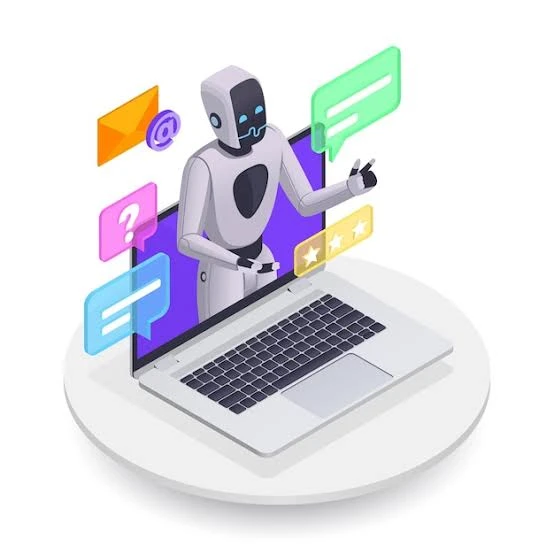
AI Chatbot

Added By BridgingFX
Product overview
Everything you need to know about this product
AI Chatbot
Customers expect businesses to respond quickly, understand their questions, and provide useful answers without forcing them through complicated support processes. Our AI Chatbot brings intelligent, automated conversations to your website, applications, customer portals, and communication channels, helping businesses provide faster support while reducing the burden of repetitive manual interactions.
Unlike a basic rule-based chatbot that can only respond to predefined commands, an AI-powered chatbot can understand natural-language questions, interpret user intent, maintain conversational context, and provide responses based on your business information and connected systems. This creates a more natural customer experience while allowing your team to automate a much wider range of interactions.
For brokers, prop firms, fintech companies, trading platforms, e-commerce businesses, SaaS providers, and other customer-focused organizations, the chatbot can be connected to CRM systems, knowledge bases, account platforms, payment infrastructure, support systems, and internal APIs.
From answering common questions and qualifying leads to assisting customers with account-related requests and escalating complex issues to human agents, the AI Chatbot becomes an intelligent layer between your customers and your business.
Custom AI Chatbot Development
Every business has different products, customers, workflows, and information. Our AI Chatbot can be customized around your business requirements rather than relying on a generic conversational experience.
The chatbot can be configured with your brand voice, business terminology, product information, support procedures, FAQs, policies, workflows, and integration requirements.
Natural-Language Conversations
Users do not always know the exact command they need to enter. An AI chatbot allows them to communicate naturally using everyday language.
The system can interpret questions, identify intent, understand conversational context, and generate appropriate responses based on the information and capabilities available to it.
Context-Aware Conversations
A useful AI assistant should understand the context of an ongoing conversation rather than treating every message as an isolated request.
The chatbot can maintain relevant conversation context so users can ask follow-up questions without repeatedly explaining the same issue.
Intelligent Intent Recognition
Different customers may describe the same problem in completely different ways.
AI-powered intent recognition helps identify what the user is actually trying to accomplish, allowing the chatbot to direct the conversation toward the appropriate answer, workflow, or support channel.
Business Knowledge Integration
The chatbot can be connected to approved business information, allowing it to answer questions using your own documentation and knowledge sources.
This can include product information, FAQs, support documentation, trading rules, account procedures, service descriptions, policies, educational materials, and other approved content.
Knowledge Base Integration
Your existing knowledge base can become the foundation of the chatbot's customer-support capabilities.
Instead of requiring your team to manually create responses for every possible question, the AI can use relevant documentation to help provide contextual answers to customer queries.
AI-Powered FAQ Automation
Many support teams spend a significant amount of time answering the same questions repeatedly.
The AI Chatbot can automate common inquiries about products, services, account procedures, registration, payments, platforms, subscriptions, support processes, and other frequently requested topics.
Customer Support Automation
The chatbot can serve as a first line of customer support, handling routine requests before involving a human agent.
This allows support teams to focus their time on complex cases that require investigation, judgment, or personal assistance.
24/7 Customer Assistance
Customers can ask questions outside normal business hours without waiting for a support representative to become available.
The chatbot can provide automated assistance continuously for supported requests, creating a more accessible customer-service experience.
CRM Integration
Connecting the chatbot to your CRM allows conversations to become part of your wider customer-management workflow.
The system can retrieve permitted customer information, create leads, update records, trigger workflows, and provide relevant information according to your CRM architecture and authorization rules.
Customer Account Assistance
For authenticated users, the chatbot can provide access to approved account-related information.
Depending on the connected systems, users may be able to check account status, subscription information, verification status, balances, or other permitted details through conversational requests.
Trading Account Integration
For brokers and trading platforms, the AI Chatbot can connect with relevant trading infrastructure.
Where appropriate and securely authorized, customers can request information about trading accounts, positions, balances, equity, margin, trading activity, or other approved account data.
Personalized Customer Responses
A connected AI assistant can provide more relevant responses based on information the user is authorized to access.
Customer type, account status, subscription level, product ownership, or other approved CRM information can be used to personalize the conversation without exposing information outside the user's permissions.
Lead Generation
The chatbot can turn customer conversations into qualified business opportunities.
When a visitor shows interest in your product or service, the AI can answer initial questions, understand their requirements, collect approved contact information, and guide them toward an appropriate next step.
Automated Lead Qualification
Instead of sending every lead directly to a salesperson, the chatbot can ask relevant qualification questions.
Responses can help determine the prospect's interests, requirements, budget range where appropriate, preferred product, market, or other business-defined criteria before creating or updating a CRM lead.
Lead Capture and CRM Creation
When a prospect provides relevant information, the chatbot can pass approved data into your CRM.
This reduces manual data entry and helps sales teams receive structured information about prospects directly from the conversation.
Product and Service Recommendations
The chatbot can help users navigate your products and services by asking questions about their needs and presenting relevant options.
This can be particularly useful when your business offers multiple account types, service packages, subscriptions, trading programs, or product categories.
Intelligent Customer Onboarding
The AI assistant can guide users through onboarding steps and explain what is required at each stage.
It can answer questions, provide instructions, direct customers to appropriate forms or secure processes, and communicate the next step in the customer journey.
Support Ticket Creation
When an issue requires further investigation, the chatbot can collect relevant information and initiate a support request.
The conversation can be categorized and transferred into your support system, giving human agents useful context before they begin working on the case.
Intelligent Support Routing
Not every question should be handled by the same department.
The AI can identify the nature of a request and route it toward sales, technical support, finance, account management, compliance-related workflows, or another designated team according to your business rules.
Human Agent Escalation
AI should assist human teams rather than create a barrier between customers and support staff.
When the chatbot cannot confidently address a request, encounters a complex issue, or receives a direct request for human assistance, it can escalate the conversation to an appropriate agent.
Conversation Handoff
A well-designed handoff should preserve useful context rather than forcing customers to repeat everything.
Relevant conversation history and collected information can be made available to the human support workflow so the agent can understand what the customer has already asked and what assistance is required.
Multi-Channel AI Support
Your customers may interact with your business through different channels. The AI Chatbot can be designed to support deployment across appropriate channels such as websites, customer portals, messaging platforms, or applications.
This creates opportunities to provide a more consistent automated support experience across your digital ecosystem.
Website AI Chatbot
A website chatbot can engage visitors while they are actively researching your products or services.
It can answer questions, explain offerings, capture leads, guide visitors toward relevant pages, and help prospects move through the customer journey.
Customer Portal Assistant
For logged-in users, the chatbot can become an intelligent assistant inside your customer portal.
It can provide contextual guidance, account information, service instructions, and support assistance while respecting the user's permissions and account access.
Multilingual AI Support
International businesses may serve customers who communicate in different languages.
The chatbot can be designed to support multiple languages, helping customers interact with your business in their preferred language where the underlying AI and knowledge resources support it.
Document and Knowledge Understanding
The AI system can be connected to approved documents and knowledge resources to help customers find relevant information through conversational questions.
Instead of asking users to search through long documentation manually, the chatbot can help surface the information relevant to their question.
Educational AI Assistant
For trading, fintech, SaaS, and other specialized businesses, the chatbot can also serve as an educational assistant.
Users can ask questions about platform features, product functionality, terminology, processes, or approved educational material and receive conversational explanations based on your available knowledge resources.
Trading Education Support
For trading businesses, the chatbot can explain platform procedures, trading terminology, account rules, challenge information, and educational content according to your approved materials.
It can help users understand information without presenting itself as a substitute for professional financial advice where such limitations apply.
Automated Notifications
The chatbot can participate in automated communication workflows triggered by approved business events.
Notifications may include account updates, subscription reminders, support updates, onboarding steps, product announcements, or other relevant customer communications.
Payment and Subscription Assistance
The AI assistant can help customers understand available payment methods, subscription plans, billing procedures, transaction statuses, and other approved information.
Where appropriate, it can connect customers to secure payment or account-management workflows rather than handling sensitive payment credentials directly within the conversation.
Troubleshooting Assistance
Customers often need help resolving common technical issues.
The AI can guide users through predefined troubleshooting procedures, platform instructions, account-access steps, configuration guidance, and other approved technical support workflows.
If the issue cannot be resolved automatically, it can collect relevant information and escalate the case.
Intelligent Search
Instead of navigating through multiple pages or documents, customers can ask the chatbot directly for the information they need.
The AI can search connected knowledge sources and provide relevant answers, helping reduce the time customers spend looking for documentation.
Retrieval From Approved Data Sources
The chatbot can be designed to retrieve information from approved internal data sources rather than relying solely on general-purpose AI knowledge.
This can improve relevance for business-specific questions and help keep responses aligned with your organization's current information.
Controlled AI Responses
For business-critical environments, AI responses should operate within defined boundaries.
The chatbot can be configured around approved knowledge sources, response rules, restricted topics, escalation conditions, and other controls designed to reduce inappropriate or unsupported responses.
Response Confidence and Escalation
Not every question should be answered automatically. The system can use confidence-oriented workflows to determine when a request should be answered, clarified, or escalated.
This creates a safer approach for situations where the available information is incomplete or the question requires human judgment.
AI Guardrails
Business AI systems require clear operational boundaries.
Guardrails can help control what information the chatbot can access, which actions it can perform, what types of requests require escalation, and which topics should be handled exclusively by authorized human teams.
Secure API Integration
The chatbot can communicate with your existing applications through secure APIs and integration layers.
Potential integrations include CRM platforms, trading systems, payment infrastructure, databases, customer portals, support platforms, analytics systems, and internal business applications.
Role-Based Access
Different users should receive different levels of information.
The AI Chatbot can work with authentication and permission controls so that sensitive account information and restricted functionality are available only to appropriately authorized users.
Data Privacy and Security
Customer conversations and account information require careful handling.
The chatbot architecture can incorporate authentication, access controls, secure API communication, data minimization, logging, and other appropriate security practices based on your infrastructure and compliance requirements.
Conversation History
Relevant conversation information can be stored or connected with your customer-support infrastructure according to your requirements.
This can help support teams understand previous interactions and improve continuity when customers return with follow-up questions.
Analytics and Reporting
AI chatbot analytics can provide visibility into how customers interact with your automated assistant.
Metrics can include conversation volume, common questions, successful resolutions, lead-generation activity, escalation rates, frequently requested topics, and other relevant performance indicators.
Customer Journey Analysis
Conversation data can help identify where customers experience confusion or friction.
By analyzing common questions and escalation points, businesses can improve their documentation, products, onboarding processes, and customer-support workflows.
Continuous Improvement
AI chatbot performance can improve over time through ongoing review of conversations, knowledge sources, unanswered questions, and user feedback.
New information can be added to the knowledge base while outdated content can be reviewed and updated to keep the chatbot aligned with your business.
Admin Dashboard
Authorized administrators can manage chatbot settings, knowledge sources, conversation flows, integrations, escalation rules, content, and other operational controls through a centralized administration environment.
Role-based administrative access can help keep sensitive configuration functions restricted to the appropriate team members.
Automated Workflow Execution
The chatbot can do more than answer questions. When integrated with your systems, it can initiate approved business workflows.
Examples may include creating leads, opening support tickets, checking account information, sending notifications, guiding onboarding, or triggering predefined operational actions.
Scalable AI Infrastructure
As customer interaction volumes increase, the chatbot infrastructure can be designed to support additional conversations, users, knowledge sources, integrations, and automated workflows.
A scalable architecture helps ensure that AI support remains useful as your business and customer base grow.
Built for Financial and Trading Businesses
Financial and trading businesses have complex customer journeys and require accurate, controlled communication.
Our AI Chatbot can be designed around brokerage, prop firm, fintech, trading platform, and digital-asset workflows, providing automated assistance while maintaining appropriate boundaries around sensitive information and business-critical actions.
Reduce Repetitive Support Work
Support teams should not have to spend their day answering the same questions repeatedly.
By automating routine conversations and providing instant access to approved information, the AI Chatbot can reduce repetitive workload and allow human teams to focus on complex cases and higher-value customer interactions.
Improve Customer Experience
Fast responses, conversational interactions, personalized information, and easy access to support can significantly improve the digital customer journey.
The chatbot provides customers with a convenient first point of contact while preserving a clear path to human assistance when needed.
Turn Your Knowledge Into an Intelligent Assistant
Your business already has valuable knowledge distributed across FAQs, documentation, product pages, support materials, CRM records, and internal systems.
An AI Chatbot brings these resources together into a conversational interface, allowing customers to access relevant information without navigating through disconnected systems.
Build an AI Assistant Around Your Business
A successful AI chatbot is not simply a chat window connected to an AI model. It is an intelligent business layer that understands your information, follows your workflows, connects with your systems, respects access controls, and knows when to involve a human.
Our AI Chatbot can be designed around your specific customer journey, operational requirements, technology stack, and growth strategy.
Automate customer conversations. Connect your business knowledge and systems. Capture and qualify leads, support onboarding, answer customer questions, provide approved account information, automate routine workflows, and escalate complex requests to human teams—creating an intelligent, secure, and scalable customer experience built around the way your business actually operates.
Product description
Learn more about product features and benefits
AI Chatbot
Customers expect businesses to respond quickly, understand their questions, and provide useful answers without forcing them through complicated support processes. Our AI Chatbot brings intelligent, automated conversations to your website, applications, customer portals, and communication channels, helping businesses provide faster support while reducing the burden of repetitive manual interactions.
Unlike a basic rule-based chatbot that can only respond to predefined commands, an AI-powered chatbot can understand natural-language questions, interpret user intent, maintain conversational context, and provide responses based on your business information and connected systems. This creates a more natural customer experience while allowing your team to automate a much wider range of interactions.
For brokers, prop firms, fintech companies, trading platforms, e-commerce businesses, SaaS providers, and other customer-focused organizations, the chatbot can be connected to CRM systems, knowledge bases, account platforms, payment infrastructure, support systems, and internal APIs.
From answering common questions and qualifying leads to assisting customers with account-related requests and escalating complex issues to human agents, the AI Chatbot becomes an intelligent layer between your customers and your business.
Custom AI Chatbot Development
Every business has different products, customers, workflows, and information. Our AI Chatbot can be customized around your business requirements rather than relying on a generic conversational experience.
The chatbot can be configured with your brand voice, business terminology, product information, support procedures, FAQs, policies, workflows, and integration requirements.
Natural-Language Conversations
Users do not always know the exact command they need to enter. An AI chatbot allows them to communicate naturally using everyday language.
The system can interpret questions, identify intent, understand conversational context, and generate appropriate responses based on the information and capabilities available to it.
Context-Aware Conversations
A useful AI assistant should understand the context of an ongoing conversation rather than treating every message as an isolated request.
The chatbot can maintain relevant conversation context so users can ask follow-up questions without repeatedly explaining the same issue.
Intelligent Intent Recognition
Different customers may describe the same problem in completely different ways.
AI-powered intent recognition helps identify what the user is actually trying to accomplish, allowing the chatbot to direct the conversation toward the appropriate answer, workflow, or support channel.
Business Knowledge Integration
The chatbot can be connected to approved business information, allowing it to answer questions using your own documentation and knowledge sources.
This can include product information, FAQs, support documentation, trading rules, account procedures, service descriptions, policies, educational materials, and other approved content.
Knowledge Base Integration
Your existing knowledge base can become the foundation of the chatbot's customer-support capabilities.
Instead of requiring your team to manually create responses for every possible question, the AI can use relevant documentation to help provide contextual answers to customer queries.
AI-Powered FAQ Automation
Many support teams spend a significant amount of time answering the same questions repeatedly.
The AI Chatbot can automate common inquiries about products, services, account procedures, registration, payments, platforms, subscriptions, support processes, and other frequently requested topics.
Customer Support Automation
The chatbot can serve as a first line of customer support, handling routine requests before involving a human agent.
This allows support teams to focus their time on complex cases that require investigation, judgment, or personal assistance.
24/7 Customer Assistance
Customers can ask questions outside normal business hours without waiting for a support representative to become available.
The chatbot can provide automated assistance continuously for supported requests, creating a more accessible customer-service experience.
CRM Integration
Connecting the chatbot to your CRM allows conversations to become part of your wider customer-management workflow.
The system can retrieve permitted customer information, create leads, update records, trigger workflows, and provide relevant information according to your CRM architecture and authorization rules.
Customer Account Assistance
For authenticated users, the chatbot can provide access to approved account-related information.
Depending on the connected systems, users may be able to check account status, subscription information, verification status, balances, or other permitted details through conversational requests.
Trading Account Integration
For brokers and trading platforms, the AI Chatbot can connect with relevant trading infrastructure.
Where appropriate and securely authorized, customers can request information about trading accounts, positions, balances, equity, margin, trading activity, or other approved account data.
Personalized Customer Responses
A connected AI assistant can provide more relevant responses based on information the user is authorized to access.
Customer type, account status, subscription level, product ownership, or other approved CRM information can be used to personalize the conversation without exposing information outside the user's permissions.
Lead Generation
The chatbot can turn customer conversations into qualified business opportunities.
When a visitor shows interest in your product or service, the AI can answer initial questions, understand their requirements, collect approved contact information, and guide them toward an appropriate next step.
Automated Lead Qualification
Instead of sending every lead directly to a salesperson, the chatbot can ask relevant qualification questions.
Responses can help determine the prospect's interests, requirements, budget range where appropriate, preferred product, market, or other business-defined criteria before creating or updating a CRM lead.
Lead Capture and CRM Creation
When a prospect provides relevant information, the chatbot can pass approved data into your CRM.
This reduces manual data entry and helps sales teams receive structured information about prospects directly from the conversation.
Product and Service Recommendations
The chatbot can help users navigate your products and services by asking questions about their needs and presenting relevant options.
This can be particularly useful when your business offers multiple account types, service packages, subscriptions, trading programs, or product categories.
Intelligent Customer Onboarding
The AI assistant can guide users through onboarding steps and explain what is required at each stage.
It can answer questions, provide instructions, direct customers to appropriate forms or secure processes, and communicate the next step in the customer journey.
Support Ticket Creation
When an issue requires further investigation, the chatbot can collect relevant information and initiate a support request.
The conversation can be categorized and transferred into your support system, giving human agents useful context before they begin working on the case.
Intelligent Support Routing
Not every question should be handled by the same department.
The AI can identify the nature of a request and route it toward sales, technical support, finance, account management, compliance-related workflows, or another designated team according to your business rules.
Human Agent Escalation
AI should assist human teams rather than create a barrier between customers and support staff.
When the chatbot cannot confidently address a request, encounters a complex issue, or receives a direct request for human assistance, it can escalate the conversation to an appropriate agent.
Conversation Handoff
A well-designed handoff should preserve useful context rather than forcing customers to repeat everything.
Relevant conversation history and collected information can be made available to the human support workflow so the agent can understand what the customer has already asked and what assistance is required.
Multi-Channel AI Support
Your customers may interact with your business through different channels. The AI Chatbot can be designed to support deployment across appropriate channels such as websites, customer portals, messaging platforms, or applications.
This creates opportunities to provide a more consistent automated support experience across your digital ecosystem.
Website AI Chatbot
A website chatbot can engage visitors while they are actively researching your products or services.
It can answer questions, explain offerings, capture leads, guide visitors toward relevant pages, and help prospects move through the customer journey.
Customer Portal Assistant
For logged-in users, the chatbot can become an intelligent assistant inside your customer portal.
It can provide contextual guidance, account information, service instructions, and support assistance while respecting the user's permissions and account access.
Multilingual AI Support
International businesses may serve customers who communicate in different languages.
The chatbot can be designed to support multiple languages, helping customers interact with your business in their preferred language where the underlying AI and knowledge resources support it.
Document and Knowledge Understanding
The AI system can be connected to approved documents and knowledge resources to help customers find relevant information through conversational questions.
Instead of asking users to search through long documentation manually, the chatbot can help surface the information relevant to their question.
Educational AI Assistant
For trading, fintech, SaaS, and other specialized businesses, the chatbot can also serve as an educational assistant.
Users can ask questions about platform features, product functionality, terminology, processes, or approved educational material and receive conversational explanations based on your available knowledge resources.
Trading Education Support
For trading businesses, the chatbot can explain platform procedures, trading terminology, account rules, challenge information, and educational content according to your approved materials.
It can help users understand information without presenting itself as a substitute for professional financial advice where such limitations apply.
Automated Notifications
The chatbot can participate in automated communication workflows triggered by approved business events.
Notifications may include account updates, subscription reminders, support updates, onboarding steps, product announcements, or other relevant customer communications.
Payment and Subscription Assistance
The AI assistant can help customers understand available payment methods, subscription plans, billing procedures, transaction statuses, and other approved information.
Where appropriate, it can connect customers to secure payment or account-management workflows rather than handling sensitive payment credentials directly within the conversation.
Troubleshooting Assistance
Customers often need help resolving common technical issues.
The AI can guide users through predefined troubleshooting procedures, platform instructions, account-access steps, configuration guidance, and other approved technical support workflows.
If the issue cannot be resolved automatically, it can collect relevant information and escalate the case.
Intelligent Search
Instead of navigating through multiple pages or documents, customers can ask the chatbot directly for the information they need.
The AI can search connected knowledge sources and provide relevant answers, helping reduce the time customers spend looking for documentation.
Retrieval From Approved Data Sources
The chatbot can be designed to retrieve information from approved internal data sources rather than relying solely on general-purpose AI knowledge.
This can improve relevance for business-specific questions and help keep responses aligned with your organization's current information.
Controlled AI Responses
For business-critical environments, AI responses should operate within defined boundaries.
The chatbot can be configured around approved knowledge sources, response rules, restricted topics, escalation conditions, and other controls designed to reduce inappropriate or unsupported responses.
Response Confidence and Escalation
Not every question should be answered automatically. The system can use confidence-oriented workflows to determine when a request should be answered, clarified, or escalated.
This creates a safer approach for situations where the available information is incomplete or the question requires human judgment.
AI Guardrails
Business AI systems require clear operational boundaries.
Guardrails can help control what information the chatbot can access, which actions it can perform, what types of requests require escalation, and which topics should be handled exclusively by authorized human teams.
Secure API Integration
The chatbot can communicate with your existing applications through secure APIs and integration layers.
Potential integrations include CRM platforms, trading systems, payment infrastructure, databases, customer portals, support platforms, analytics systems, and internal business applications.
Role-Based Access
Different users should receive different levels of information.
The AI Chatbot can work with authentication and permission controls so that sensitive account information and restricted functionality are available only to appropriately authorized users.
Data Privacy and Security
Customer conversations and account information require careful handling.
The chatbot architecture can incorporate authentication, access controls, secure API communication, data minimization, logging, and other appropriate security practices based on your infrastructure and compliance requirements.
Conversation History
Relevant conversation information can be stored or connected with your customer-support infrastructure according to your requirements.
This can help support teams understand previous interactions and improve continuity when customers return with follow-up questions.
Analytics and Reporting
AI chatbot analytics can provide visibility into how customers interact with your automated assistant.
Metrics can include conversation volume, common questions, successful resolutions, lead-generation activity, escalation rates, frequently requested topics, and other relevant performance indicators.
Customer Journey Analysis
Conversation data can help identify where customers experience confusion or friction.
By analyzing common questions and escalation points, businesses can improve their documentation, products, onboarding processes, and customer-support workflows.
Continuous Improvement
AI chatbot performance can improve over time through ongoing review of conversations, knowledge sources, unanswered questions, and user feedback.
New information can be added to the knowledge base while outdated content can be reviewed and updated to keep the chatbot aligned with your business.
Admin Dashboard
Authorized administrators can manage chatbot settings, knowledge sources, conversation flows, integrations, escalation rules, content, and other operational controls through a centralized administration environment.
Role-based administrative access can help keep sensitive configuration functions restricted to the appropriate team members.
Automated Workflow Execution
The chatbot can do more than answer questions. When integrated with your systems, it can initiate approved business workflows.
Examples may include creating leads, opening support tickets, checking account information, sending notifications, guiding onboarding, or triggering predefined operational actions.
Scalable AI Infrastructure
As customer interaction volumes increase, the chatbot infrastructure can be designed to support additional conversations, users, knowledge sources, integrations, and automated workflows.
A scalable architecture helps ensure that AI support remains useful as your business and customer base grow.
Built for Financial and Trading Businesses
Financial and trading businesses have complex customer journeys and require accurate, controlled communication.
Our AI Chatbot can be designed around brokerage, prop firm, fintech, trading platform, and digital-asset workflows, providing automated assistance while maintaining appropriate boundaries around sensitive information and business-critical actions.
Reduce Repetitive Support Work
Support teams should not have to spend their day answering the same questions repeatedly.
By automating routine conversations and providing instant access to approved information, the AI Chatbot can reduce repetitive workload and allow human teams to focus on complex cases and higher-value customer interactions.
Improve Customer Experience
Fast responses, conversational interactions, personalized information, and easy access to support can significantly improve the digital customer journey.
The chatbot provides customers with a convenient first point of contact while preserving a clear path to human assistance when needed.
Turn Your Knowledge Into an Intelligent Assistant
Your business already has valuable knowledge distributed across FAQs, documentation, product pages, support materials, CRM records, and internal systems.
An AI Chatbot brings these resources together into a conversational interface, allowing customers to access relevant information without navigating through disconnected systems.
Build an AI Assistant Around Your Business
A successful AI chatbot is not simply a chat window connected to an AI model. It is an intelligent business layer that understands your information, follows your workflows, connects with your systems, respects access controls, and knows when to involve a human.
Our AI Chatbot can be designed around your specific customer journey, operational requirements, technology stack, and growth strategy.
Automate customer conversations. Connect your business knowledge and systems. Capture and qualify leads, support onboarding, answer customer questions, provide approved account information, automate routine workflows, and escalate complex requests to human teams—creating an intelligent, secure, and scalable customer experience built around the way your business actually operates.
Product specification
Quick product information

No review given yet!