العربية
 English
 हिन्दी
 Malay
Malay اُردُو
 বাংলা
বাংলা Français
 Português
 Italiano
 Nederlands
 Deutsch
 Русский
 Español
 中文
中文 ไทย
ไทย Türkçe
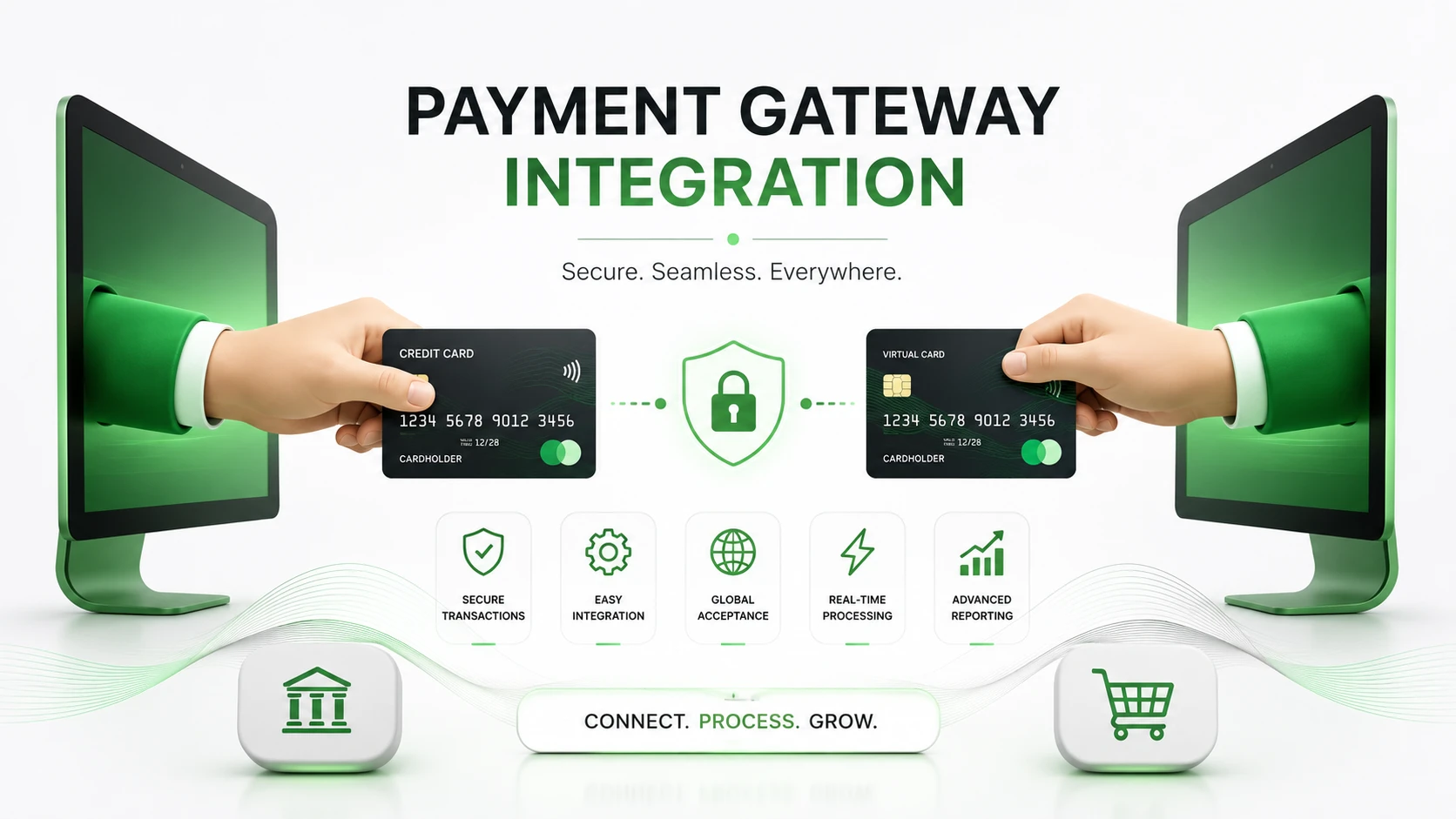
Payment Gateway Integration

Added By BridgingFX
Product overview
Everything you need to know about this product
Payment Gateway Integration
A smooth payment experience is essential for any brokerage, trading platform, fintech business, or digital financial service. Clients expect deposits to be processed quickly, withdrawals to be handled reliably, and transaction status to be reflected accurately across their accounts. Our Payment Gateway Integration service connects your platform with the payment providers your clients already use, creating a secure and automated infrastructure for managing deposits, withdrawals, transaction processing, reconciliation, and payment reporting.
From card payments and bank transfers to e-wallets and other supported payment methods, we integrate payment gateways into your existing technology environment and connect them with your CRM, client portal, wallet system, and administrative infrastructure. Multi-currency support and intelligent payment routing provide additional flexibility for businesses operating across different regions and client markets.
With automated transaction updates, fraud-monitoring capabilities, retry mechanisms, chargeback management, settlement reporting, and centralized administration, the integration is designed to reduce manual payment operations while creating a smoother experience for both clients and internal finance teams.
Multi-Channel Payment Support
Different clients prefer different ways to fund their accounts. A modern payment infrastructure should therefore support multiple payment methods rather than forcing every customer through a single channel.
Depending on the selected providers and target markets, the platform can support credit and debit cards, bank transfers, e-wallets, local payment methods, and other supported payment solutions through a centralized integration layer.
Card Payment Integration
Card payments remain an important funding method for many online financial platforms. We integrate supported card payment gateways directly into your client-facing environment so users can initiate deposits without leaving the intended payment journey unnecessarily.
The integration can handle payment requests, authorization responses, transaction status updates, successful deposits, failed payments, and other gateway events according to the provider's API capabilities.
Bank Transfer Integration
For clients who prefer traditional banking methods, bank-transfer workflows can be incorporated into the payment infrastructure.
The system can support relevant payment instructions, transaction references, payment-status tracking, reconciliation workflows, and account-crediting processes according to the selected banking or payment provider.
E-Wallet Integration
Popular e-wallets can provide clients with another convenient way to fund their accounts. We can integrate supported wallet providers into the platform and connect their transaction responses to the relevant client account.
This gives users greater choice while allowing your business to manage different payment methods through a more centralized architecture.
Multi-Currency Payments
International businesses often need to accept payments in multiple currencies. The payment infrastructure can be configured to support the currencies offered by your selected payment providers and business model.
Currency-aware processing can help ensure that transaction amounts, payment requests, account balances, and reporting records remain consistent throughout the payment lifecycle.
Global Payment Infrastructure
Businesses operating across multiple countries may require different payment providers for different regions. Our integration approach allows multiple gateways to work together within the same payment architecture.
This makes it possible to provide region-specific payment options while maintaining centralized visibility over the resulting transactions.
Intelligent Payment Routing
Not every payment provider performs equally across every market. One provider may be more suitable for a particular currency, while another may offer better availability in a specific region.
Configurable payment routing can direct transactions toward the most appropriate provider based on criteria such as region, currency, payment method, transaction value, availability, processing cost, or predefined business rules.
Cost-Based Routing
Payment processing costs can vary between providers and transaction types. Routing logic can take configured processing costs into consideration when determining which provider should receive an eligible payment request.
This can help businesses manage payment infrastructure more efficiently while maintaining appropriate transaction success and availability requirements.
Region-Based Routing
Local payment preferences and provider availability vary significantly by market. Region-based routing allows the platform to select payment providers according to the client's geographic market or other configured criteria.
This provides greater flexibility for businesses serving international customers.
Currency-Based Routing
Different providers may support different currencies or offer different processing capabilities for specific currencies.
Currency-based routing allows transactions to be directed toward compatible payment providers automatically, reducing unnecessary failures caused by unsupported currency combinations.
Automated Transaction Processing
Once a payment is initiated, the platform can automatically process the transaction response and update the relevant account or wallet according to the configured workflow.
This minimizes manual intervention and helps ensure that successful payments are reflected promptly throughout the client's account environment.
Real-Time Payment Status Updates
Clients need accurate information about whether their transactions are pending, successful, failed, or under review.
Payment gateway integrations can process real-time webhook notifications and provider responses so transaction statuses are updated automatically as payment events occur.
Automated Account Crediting
When an eligible deposit is successfully confirmed, the system can automatically update the corresponding client wallet or account balance.
This removes the need for finance teams to manually confirm every successful transaction and creates a faster funding experience for clients.
Withdrawal Processing
Payment integration should cover more than deposits. Clients also need reliable mechanisms for withdrawing eligible funds.
Withdrawal workflows can connect your client portal, internal approval process, payment gateway, banking provider, and account system so requests move through the appropriate stages in a structured manner.
Withdrawal Approval Workflows
Some businesses require withdrawals to undergo internal review before funds are released. The system can support configurable approval workflows that allow finance, compliance, or administrative teams to review withdrawal requests.
Depending on business requirements, workflows can include account checks, transaction reviews, approval stages, status updates, and payment-provider submission.
Automated Payment Notifications
Payment events can trigger automated notifications to clients and internal teams.
Users can receive relevant updates when deposits are initiated, confirmed, delayed, rejected, or refunded, while internal teams can be notified about important operational events requiring attention.
Payment Webhook Integration
Modern payment providers commonly use webhooks to communicate transaction events back to the merchant platform.
We integrate webhook functionality so your system can receive provider notifications and automatically update transaction records, payment statuses, wallet balances, and other relevant components.
Automated Retry Logic
Temporary gateway failures do not always mean a payment cannot be completed. Connectivity issues, provider timeouts, or temporary processing interruptions can occur during normal payment operations.
Automated retry logic can attempt eligible transactions again according to predefined rules, reducing unnecessary failures while avoiding uncontrolled repeated payment attempts.
Smart Failure Handling
When a transaction cannot be completed, the platform should provide a clear and structured response.
Payment failure handling can categorize relevant errors, update transaction statuses, notify users, and provide internal teams with enough information to investigate the issue. This creates a more controlled process than simply displaying a generic payment error.
Fraud Detection and Risk Controls
Payment systems need to consider fraudulent or suspicious activity. The integration can connect with supported fraud-detection and risk-management services to evaluate transactions according to configured criteria.
Risk controls can include transaction limits, velocity checks, geographic rules, device information, suspicious activity indicators, and other controls supported by the selected payment infrastructure.
Transaction Monitoring
Centralized transaction monitoring gives administrators visibility into payment activity across all connected providers.
Teams can review transaction statuses, payment methods, currencies, providers, client accounts, amounts, timestamps, and other relevant information from a structured administrative environment.
Chargeback Management
Card transactions can result in disputes or chargebacks. Effective chargeback management helps businesses respond quickly and maintain organized records.
The platform can track chargeback events, associate disputes with original transactions, record relevant statuses, and support internal workflows for investigation and response.
Refund Management
Payment infrastructure may also need to support full or partial refunds where applicable.
Refund workflows can connect the internal transaction record with the relevant payment provider, allowing refund requests and resulting statuses to be tracked throughout the process.
Transaction Reconciliation
Finance teams need to ensure that internal transaction records match payment-provider and settlement records.
The system can support reconciliation workflows that compare transactions across internal accounts and external payment providers, helping teams identify missing payments, discrepancies, duplicate records, or unresolved transactions.
Automated Reconciliation
Where supported by provider reporting or APIs, reconciliation processes can be automated to reduce repetitive financial administration.
Automated matching can compare transaction identifiers, amounts, currencies, timestamps, statuses, and other relevant attributes to help finance teams identify successfully reconciled transactions.
Settlement Reporting
Payment providers settle funds according to their own schedules and processes. Finance teams need visibility into these settlements to understand what has been processed, what has been received, and what remains outstanding.
Detailed settlement reporting can organize provider settlement information alongside internal transaction records, creating a clearer view of payment flows.
Provider-Level Reporting
When multiple payment providers are connected, centralized reporting makes it easier to understand how each provider is performing.
Reports can compare transaction volumes, success rates, processing costs, failed payments, refunds, chargebacks, and settlement activity across providers.
Payment Success Rate Monitoring
Transaction success rate is an important indicator of payment infrastructure quality. The platform can track successful and unsuccessful transactions across different providers, payment methods, regions, and currencies.
This information can help identify payment methods or providers that require optimization.
Payment Performance Analytics
Detailed analytics can provide insights into transaction trends, deposit volumes, withdrawal activity, failure rates, average transaction values, provider performance, and other relevant payment metrics.
These insights help finance and operational teams make more informed decisions about payment infrastructure.
CRM Integration
Payment activity should be reflected within the client's broader relationship record. CRM integration can automatically associate deposits, withdrawals, transaction statuses, payment methods, and other relevant information with the appropriate client profile.
This gives sales, support, finance, and account-management teams greater visibility into the client's financial activity.
Wallet and Account Integration
For brokerages and trading platforms, payment processing often needs to connect directly with an internal wallet or trading account system.
Successful deposits can trigger wallet-credit workflows, while approved withdrawals can initiate the appropriate payment process. This creates a connected flow between payment providers and client accounts.
Trading Platform Integration
Where required, payment infrastructure can connect with trading account systems so eligible deposits and withdrawals are reflected within the appropriate client trading environment.
This allows funding activity to become part of a broader automated account-management workflow.
Centralized Payment Dashboard
Administrators need a single location where they can monitor payment activity. A centralized dashboard can provide visibility into deposits, withdrawals, refunds, chargebacks, provider status, transaction failures, settlement information, and other payment events.
This makes it easier for finance and operations teams to identify issues and take action quickly.
Role-Based Payment Management
Payment data can contain sensitive financial information. Role-based access controls can be implemented so different internal teams have access only to the payment functions relevant to their responsibilities.
For example, finance teams may manage reconciliation and settlements, support teams may view transaction statuses, and administrators may manage gateway configuration.
Transaction Audit Trails
A complete record of payment activity is important for financial operations and internal controls.
The system can maintain audit-oriented records of transaction creation, status changes, approvals, provider responses, refunds, chargebacks, configuration changes, and other important payment events.
Secure Payment Architecture
Security is a fundamental consideration when integrating financial transactions. We design integrations around secure API communication, appropriate authentication mechanisms, webhook verification, access controls, and separation of sensitive payment responsibilities.
Where card processing is involved, the architecture can be structured to work with payment providers in ways that reduce unnecessary handling of sensitive card information within your own systems.
PCI-Conscious Integration
Payment integrations should be designed with applicable payment-security requirements in mind. Where card payments are supported, the integration approach can use provider-hosted or tokenized payment flows where appropriate to reduce the amount of sensitive payment data handled directly by the business platform.
Specific compliance requirements depend on the selected payment providers, architecture, jurisdictions, and business model.
Transaction Limits and Controls
Businesses may need to establish limits around deposits, withdrawals, transaction frequency, or transaction amounts.
Configurable limits can help support internal risk policies and operational controls while providing a structured way to manage unusual or high-value payment activity.
Automated Payment Workflows
The integration can automate repetitive processes across the payment lifecycle, including transaction creation, payment confirmation, account updates, notifications, reconciliation records, and reporting.
Automation reduces the operational workload and helps create more consistent payment processing.
Payment Provider Failover
Depending on the provider architecture, multiple payment gateways can be configured to provide additional resilience.
If a preferred provider becomes temporarily unavailable, eligible transactions can potentially be routed toward an alternative provider according to predefined rules, helping maintain payment availability.
Scalable Payment Infrastructure
As your client base grows, transaction volume and payment complexity grow with it. The payment architecture should therefore be capable of supporting additional providers, currencies, regions, payment methods, and transaction volumes.
Our integrations are designed around scalable architecture so the payment environment can evolve alongside your business.
API-Based Integration
Modern payment ecosystems depend heavily on APIs. We integrate payment providers through their supported API infrastructure and connect those interfaces to your existing application, CRM, wallet, client portal, and administrative systems.
This allows payment processing to become a seamless part of your technology stack rather than a disconnected external process.
Custom Payment Workflows
Every business has different payment requirements. A brokerage may need deposits to flow directly into trading accounts, while another financial platform may require manual approval before funds are credited.
We customize payment workflows around your business rules, account structures, approval requirements, transaction types, and operational processes.
Global Client Experience
International clients expect payment options that are familiar and convenient in their region. Supporting multiple providers and currencies allows your business to create a more localized funding experience without maintaining completely separate payment infrastructures.
The result is a more flexible payment environment capable of serving clients across multiple markets.
Finance Team Visibility
Payment operations should not depend on manual spreadsheets and fragmented provider dashboards.
Centralized transaction records, settlement reports, reconciliation tools, provider analytics, and status monitoring give finance teams a clearer view of the payment environment and help them manage daily operations more efficiently.
Built for Financial and Trading Businesses
Our Payment Gateway Integration service is designed for businesses that depend on reliable financial transactions, including forex brokerages, prop firms, trading platforms, fintech applications, digital-asset businesses, investment platforms, and other online financial services.
The architecture can be adapted to different payment models, transaction types, currencies, account structures, and provider requirements.
Reduce Payment Friction
A successful payment experience should feel simple to the client even though the technology behind it may be complex.
By connecting payment providers, CRM systems, wallets, account-management systems, risk controls, notification services, and reporting infrastructure, we create an environment where transactions can move through the required processes with less manual intervention.
Build a Payment Infrastructure That Works Globally
Your clients should be able to fund their accounts through convenient payment methods, receive accurate transaction updates, and access reliable withdrawal workflows. Your finance team should have clear visibility into every transaction, settlement, refund, chargeback, and provider relationship.
Our Payment Gateway Integration service brings these requirements together into a secure, flexible, and scalable payment backbone.
Connect the payment methods your clients expect. Automate deposits and withdrawals, route transactions intelligently, monitor payment performance, integrate directly with your CRM and account systems, and build a global payment infrastructure designed for reliability, transparency, and operational efficiency.
Product description
Learn more about product features and benefits
Payment Gateway Integration
A smooth payment experience is essential for any brokerage, trading platform, fintech business, or digital financial service. Clients expect deposits to be processed quickly, withdrawals to be handled reliably, and transaction status to be reflected accurately across their accounts. Our Payment Gateway Integration service connects your platform with the payment providers your clients already use, creating a secure and automated infrastructure for managing deposits, withdrawals, transaction processing, reconciliation, and payment reporting.
From card payments and bank transfers to e-wallets and other supported payment methods, we integrate payment gateways into your existing technology environment and connect them with your CRM, client portal, wallet system, and administrative infrastructure. Multi-currency support and intelligent payment routing provide additional flexibility for businesses operating across different regions and client markets.
With automated transaction updates, fraud-monitoring capabilities, retry mechanisms, chargeback management, settlement reporting, and centralized administration, the integration is designed to reduce manual payment operations while creating a smoother experience for both clients and internal finance teams.
Multi-Channel Payment Support
Different clients prefer different ways to fund their accounts. A modern payment infrastructure should therefore support multiple payment methods rather than forcing every customer through a single channel.
Depending on the selected providers and target markets, the platform can support credit and debit cards, bank transfers, e-wallets, local payment methods, and other supported payment solutions through a centralized integration layer.
Card Payment Integration
Card payments remain an important funding method for many online financial platforms. We integrate supported card payment gateways directly into your client-facing environment so users can initiate deposits without leaving the intended payment journey unnecessarily.
The integration can handle payment requests, authorization responses, transaction status updates, successful deposits, failed payments, and other gateway events according to the provider's API capabilities.
Bank Transfer Integration
For clients who prefer traditional banking methods, bank-transfer workflows can be incorporated into the payment infrastructure.
The system can support relevant payment instructions, transaction references, payment-status tracking, reconciliation workflows, and account-crediting processes according to the selected banking or payment provider.
E-Wallet Integration
Popular e-wallets can provide clients with another convenient way to fund their accounts. We can integrate supported wallet providers into the platform and connect their transaction responses to the relevant client account.
This gives users greater choice while allowing your business to manage different payment methods through a more centralized architecture.
Multi-Currency Payments
International businesses often need to accept payments in multiple currencies. The payment infrastructure can be configured to support the currencies offered by your selected payment providers and business model.
Currency-aware processing can help ensure that transaction amounts, payment requests, account balances, and reporting records remain consistent throughout the payment lifecycle.
Global Payment Infrastructure
Businesses operating across multiple countries may require different payment providers for different regions. Our integration approach allows multiple gateways to work together within the same payment architecture.
This makes it possible to provide region-specific payment options while maintaining centralized visibility over the resulting transactions.
Intelligent Payment Routing
Not every payment provider performs equally across every market. One provider may be more suitable for a particular currency, while another may offer better availability in a specific region.
Configurable payment routing can direct transactions toward the most appropriate provider based on criteria such as region, currency, payment method, transaction value, availability, processing cost, or predefined business rules.
Cost-Based Routing
Payment processing costs can vary between providers and transaction types. Routing logic can take configured processing costs into consideration when determining which provider should receive an eligible payment request.
This can help businesses manage payment infrastructure more efficiently while maintaining appropriate transaction success and availability requirements.
Region-Based Routing
Local payment preferences and provider availability vary significantly by market. Region-based routing allows the platform to select payment providers according to the client's geographic market or other configured criteria.
This provides greater flexibility for businesses serving international customers.
Currency-Based Routing
Different providers may support different currencies or offer different processing capabilities for specific currencies.
Currency-based routing allows transactions to be directed toward compatible payment providers automatically, reducing unnecessary failures caused by unsupported currency combinations.
Automated Transaction Processing
Once a payment is initiated, the platform can automatically process the transaction response and update the relevant account or wallet according to the configured workflow.
This minimizes manual intervention and helps ensure that successful payments are reflected promptly throughout the client's account environment.
Real-Time Payment Status Updates
Clients need accurate information about whether their transactions are pending, successful, failed, or under review.
Payment gateway integrations can process real-time webhook notifications and provider responses so transaction statuses are updated automatically as payment events occur.
Automated Account Crediting
When an eligible deposit is successfully confirmed, the system can automatically update the corresponding client wallet or account balance.
This removes the need for finance teams to manually confirm every successful transaction and creates a faster funding experience for clients.
Withdrawal Processing
Payment integration should cover more than deposits. Clients also need reliable mechanisms for withdrawing eligible funds.
Withdrawal workflows can connect your client portal, internal approval process, payment gateway, banking provider, and account system so requests move through the appropriate stages in a structured manner.
Withdrawal Approval Workflows
Some businesses require withdrawals to undergo internal review before funds are released. The system can support configurable approval workflows that allow finance, compliance, or administrative teams to review withdrawal requests.
Depending on business requirements, workflows can include account checks, transaction reviews, approval stages, status updates, and payment-provider submission.
Automated Payment Notifications
Payment events can trigger automated notifications to clients and internal teams.
Users can receive relevant updates when deposits are initiated, confirmed, delayed, rejected, or refunded, while internal teams can be notified about important operational events requiring attention.
Payment Webhook Integration
Modern payment providers commonly use webhooks to communicate transaction events back to the merchant platform.
We integrate webhook functionality so your system can receive provider notifications and automatically update transaction records, payment statuses, wallet balances, and other relevant components.
Automated Retry Logic
Temporary gateway failures do not always mean a payment cannot be completed. Connectivity issues, provider timeouts, or temporary processing interruptions can occur during normal payment operations.
Automated retry logic can attempt eligible transactions again according to predefined rules, reducing unnecessary failures while avoiding uncontrolled repeated payment attempts.
Smart Failure Handling
When a transaction cannot be completed, the platform should provide a clear and structured response.
Payment failure handling can categorize relevant errors, update transaction statuses, notify users, and provide internal teams with enough information to investigate the issue. This creates a more controlled process than simply displaying a generic payment error.
Fraud Detection and Risk Controls
Payment systems need to consider fraudulent or suspicious activity. The integration can connect with supported fraud-detection and risk-management services to evaluate transactions according to configured criteria.
Risk controls can include transaction limits, velocity checks, geographic rules, device information, suspicious activity indicators, and other controls supported by the selected payment infrastructure.
Transaction Monitoring
Centralized transaction monitoring gives administrators visibility into payment activity across all connected providers.
Teams can review transaction statuses, payment methods, currencies, providers, client accounts, amounts, timestamps, and other relevant information from a structured administrative environment.
Chargeback Management
Card transactions can result in disputes or chargebacks. Effective chargeback management helps businesses respond quickly and maintain organized records.
The platform can track chargeback events, associate disputes with original transactions, record relevant statuses, and support internal workflows for investigation and response.
Refund Management
Payment infrastructure may also need to support full or partial refunds where applicable.
Refund workflows can connect the internal transaction record with the relevant payment provider, allowing refund requests and resulting statuses to be tracked throughout the process.
Transaction Reconciliation
Finance teams need to ensure that internal transaction records match payment-provider and settlement records.
The system can support reconciliation workflows that compare transactions across internal accounts and external payment providers, helping teams identify missing payments, discrepancies, duplicate records, or unresolved transactions.
Automated Reconciliation
Where supported by provider reporting or APIs, reconciliation processes can be automated to reduce repetitive financial administration.
Automated matching can compare transaction identifiers, amounts, currencies, timestamps, statuses, and other relevant attributes to help finance teams identify successfully reconciled transactions.
Settlement Reporting
Payment providers settle funds according to their own schedules and processes. Finance teams need visibility into these settlements to understand what has been processed, what has been received, and what remains outstanding.
Detailed settlement reporting can organize provider settlement information alongside internal transaction records, creating a clearer view of payment flows.
Provider-Level Reporting
When multiple payment providers are connected, centralized reporting makes it easier to understand how each provider is performing.
Reports can compare transaction volumes, success rates, processing costs, failed payments, refunds, chargebacks, and settlement activity across providers.
Payment Success Rate Monitoring
Transaction success rate is an important indicator of payment infrastructure quality. The platform can track successful and unsuccessful transactions across different providers, payment methods, regions, and currencies.
This information can help identify payment methods or providers that require optimization.
Payment Performance Analytics
Detailed analytics can provide insights into transaction trends, deposit volumes, withdrawal activity, failure rates, average transaction values, provider performance, and other relevant payment metrics.
These insights help finance and operational teams make more informed decisions about payment infrastructure.
CRM Integration
Payment activity should be reflected within the client's broader relationship record. CRM integration can automatically associate deposits, withdrawals, transaction statuses, payment methods, and other relevant information with the appropriate client profile.
This gives sales, support, finance, and account-management teams greater visibility into the client's financial activity.
Wallet and Account Integration
For brokerages and trading platforms, payment processing often needs to connect directly with an internal wallet or trading account system.
Successful deposits can trigger wallet-credit workflows, while approved withdrawals can initiate the appropriate payment process. This creates a connected flow between payment providers and client accounts.
Trading Platform Integration
Where required, payment infrastructure can connect with trading account systems so eligible deposits and withdrawals are reflected within the appropriate client trading environment.
This allows funding activity to become part of a broader automated account-management workflow.
Centralized Payment Dashboard
Administrators need a single location where they can monitor payment activity. A centralized dashboard can provide visibility into deposits, withdrawals, refunds, chargebacks, provider status, transaction failures, settlement information, and other payment events.
This makes it easier for finance and operations teams to identify issues and take action quickly.
Role-Based Payment Management
Payment data can contain sensitive financial information. Role-based access controls can be implemented so different internal teams have access only to the payment functions relevant to their responsibilities.
For example, finance teams may manage reconciliation and settlements, support teams may view transaction statuses, and administrators may manage gateway configuration.
Transaction Audit Trails
A complete record of payment activity is important for financial operations and internal controls.
The system can maintain audit-oriented records of transaction creation, status changes, approvals, provider responses, refunds, chargebacks, configuration changes, and other important payment events.
Secure Payment Architecture
Security is a fundamental consideration when integrating financial transactions. We design integrations around secure API communication, appropriate authentication mechanisms, webhook verification, access controls, and separation of sensitive payment responsibilities.
Where card processing is involved, the architecture can be structured to work with payment providers in ways that reduce unnecessary handling of sensitive card information within your own systems.
PCI-Conscious Integration
Payment integrations should be designed with applicable payment-security requirements in mind. Where card payments are supported, the integration approach can use provider-hosted or tokenized payment flows where appropriate to reduce the amount of sensitive payment data handled directly by the business platform.
Specific compliance requirements depend on the selected payment providers, architecture, jurisdictions, and business model.
Transaction Limits and Controls
Businesses may need to establish limits around deposits, withdrawals, transaction frequency, or transaction amounts.
Configurable limits can help support internal risk policies and operational controls while providing a structured way to manage unusual or high-value payment activity.
Automated Payment Workflows
The integration can automate repetitive processes across the payment lifecycle, including transaction creation, payment confirmation, account updates, notifications, reconciliation records, and reporting.
Automation reduces the operational workload and helps create more consistent payment processing.
Payment Provider Failover
Depending on the provider architecture, multiple payment gateways can be configured to provide additional resilience.
If a preferred provider becomes temporarily unavailable, eligible transactions can potentially be routed toward an alternative provider according to predefined rules, helping maintain payment availability.
Scalable Payment Infrastructure
As your client base grows, transaction volume and payment complexity grow with it. The payment architecture should therefore be capable of supporting additional providers, currencies, regions, payment methods, and transaction volumes.
Our integrations are designed around scalable architecture so the payment environment can evolve alongside your business.
API-Based Integration
Modern payment ecosystems depend heavily on APIs. We integrate payment providers through their supported API infrastructure and connect those interfaces to your existing application, CRM, wallet, client portal, and administrative systems.
This allows payment processing to become a seamless part of your technology stack rather than a disconnected external process.
Custom Payment Workflows
Every business has different payment requirements. A brokerage may need deposits to flow directly into trading accounts, while another financial platform may require manual approval before funds are credited.
We customize payment workflows around your business rules, account structures, approval requirements, transaction types, and operational processes.
Global Client Experience
International clients expect payment options that are familiar and convenient in their region. Supporting multiple providers and currencies allows your business to create a more localized funding experience without maintaining completely separate payment infrastructures.
The result is a more flexible payment environment capable of serving clients across multiple markets.
Finance Team Visibility
Payment operations should not depend on manual spreadsheets and fragmented provider dashboards.
Centralized transaction records, settlement reports, reconciliation tools, provider analytics, and status monitoring give finance teams a clearer view of the payment environment and help them manage daily operations more efficiently.
Built for Financial and Trading Businesses
Our Payment Gateway Integration service is designed for businesses that depend on reliable financial transactions, including forex brokerages, prop firms, trading platforms, fintech applications, digital-asset businesses, investment platforms, and other online financial services.
The architecture can be adapted to different payment models, transaction types, currencies, account structures, and provider requirements.
Reduce Payment Friction
A successful payment experience should feel simple to the client even though the technology behind it may be complex.
By connecting payment providers, CRM systems, wallets, account-management systems, risk controls, notification services, and reporting infrastructure, we create an environment where transactions can move through the required processes with less manual intervention.
Build a Payment Infrastructure That Works Globally
Your clients should be able to fund their accounts through convenient payment methods, receive accurate transaction updates, and access reliable withdrawal workflows. Your finance team should have clear visibility into every transaction, settlement, refund, chargeback, and provider relationship.
Our Payment Gateway Integration service brings these requirements together into a secure, flexible, and scalable payment backbone.
Connect the payment methods your clients expect. Automate deposits and withdrawals, route transactions intelligently, monitor payment performance, integrate directly with your CRM and account systems, and build a global payment infrastructure designed for reliability, transparency, and operational efficiency.
Product specification
Quick product information

No review given yet!